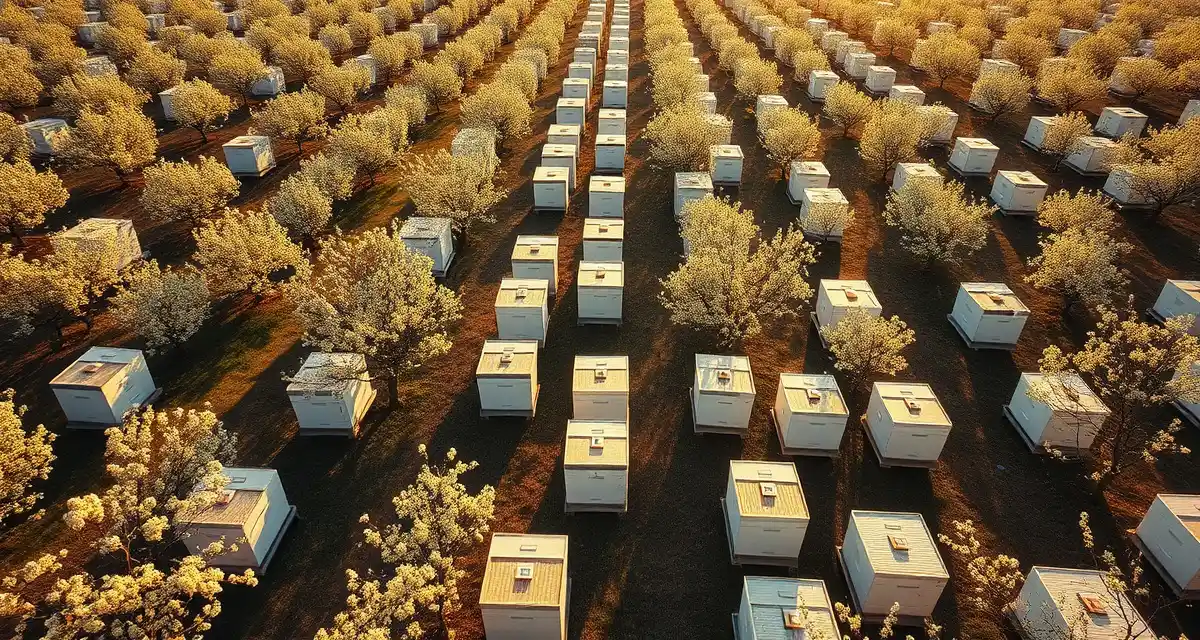
The Almond Pollination Supply Crisis: Not Enough Hives for Growing Acreage
California almond acreage has grown over 50% in the past two decades while US honey bee colony counts have remained essentially flat. The math creates a structural supply problem that isn't going away. Roughly 1.3 million hives are needed annually for California almond pollination, and the US supply barely covers that demand, meaning every colony that doesn't make it to California creates a shortage somewhere.
Every 1% growth in almond acreage requires approximately 13,000 additional hives. When acreage grows by 5% in a single year, as it has in multiple recent years, and colony supply stays flat or contracts due to disease or winter losses, the supply gap widens measurably. This structural shortage is the underlying reason why almond pollination rates have increased from around $50 per hive in 2000 to $180 to $225 per hive today.
TL;DR
- California almond pollination consumes roughly 80% of the US commercial hive population every February, making it the most supply-constrained pollination market in the country.
- Per-hive rates have held between $185 and $220 for 6-8 frame colonies over recent seasons.
- Contracts are typically signed October through November for the following February season; operators without agreements by December are working from a weak position.
- Hive strength minimums range from 6 to 8 frames of bees depending on the grower, with premium-strength colonies commanding $200-215/hive.
- varroa management, documentation, and logistics coordination in the 6-8 weeks before delivery determine whether almond season is profitable or a breakeven event.
How We Got Here
The California almond industry's growth has been one of agriculture's great success stories over the past 30 years. Almonds became the state's most valuable crop, California became the world's dominant almond supplier, and growers responded to strong global demand by planting more acreage constantly.
The beekeeping industry hasn't kept pace. Colony counts in the US have fluctuated but haven't shown sustained growth to match almond demand. Varroa mite management challenges, winter losses averaging 25 to 40% annually for commercial operators, and the capital intensity of building a commercial beekeeping operation have all constrained supply growth.
The result is that in most years, every available commercial hive in the US ends up in California almonds if the operator wants it there. Demand has chronically exceeded supply, and that dynamic shapes everything about how the almond pollination market works.
The Supply Numbers
The US honey bee colony count, as reported by USDA, has ranged from 2.5 to 3 million colonies in recent years. California almond needs approximately 1.3 million hives. That means roughly half of all US honey bee colonies need to go to California for almond season, leaving the other half to cover every other pollination demand in the country.
This concentration creates its own fragility. A bad winter in the Northern Plains or Southeast, where many commercial colonies spend the non-almond months, can reduce the number of hives available for February California delivery. Disease years, pesticide incidents, or management failures that hit a significant number of commercial operations create ripple effects felt immediately in California almond pollination rates.
For operators considering the US pollination market size and dynamics, California almonds dominate the entire picture in a way that shapes every commercial beekeeper's annual decisions.
What This Means for Pollination Rates
The supply-demand imbalance creates upward pressure on rates that is structural rather than cyclical. Short of a dramatic expansion in US colony counts or a significant contraction in California almond acreage, rates are more likely to rise than fall over the next decade.
Growers understand this, even if they find it uncomfortable. Large growers with sophisticated procurement operations now lock in multi-year contracts with trusted beekeepers at rates that reflect the supply reality, rather than negotiating spot market prices each January. This benefits both parties by creating revenue predictability for operators and supply security for growers.
New almond acreage coming into production in the Tehama County and Red Bluff areas of the northern Sacramento Valley, and the continued expansion in Kern County, adds demand without proportional supply growth.
Implications for Commercial Beekeepers
For commercial operators, the supply shortage is the best business case that exists for being in this industry. The structural condition that makes almond pollination valuable, demand exceeding supply, shows no sign of reversing. Operators who manage their colonies well through winter, deliver strong hives reliably, and maintain grower relationships have pricing power that didn't exist when rates were $50 per hive.
The shortage also creates opportunity for operators who can expand their colony count with healthy, productive hives. Every additional hive that can make it to California in February at 6+ frames of bees is worth $180 to $225. The constraint on expansion is winter survival and summer management quality, not demand.
Frequently Asked Questions
How has almond acreage growth affected pollination supply?
California almond acreage has grown more than 50% over the past two decades, from roughly 500,000 acres to over 800,000 acres. This growth has outpaced any increase in US colony supply. The USDA estimates approximately 1.3 million hives are needed for California almond pollination, which requires nearly half of all US honey bee colonies to converge on California every February. The combination of growing acreage and constrained colony supply has created the chronic supply shortage that drives today's almond pollination rates of $180 to $225 per hive.
Are there enough commercial hives to meet US pollination demand?
Barely, and not in a comfortable margin. In most years, the US commercial hive supply is adequate to meet California almond demand, but without significant surplus. High winter loss years, disease events, or unexpectedly poor colony buildup can create genuine shortages where growers cannot find enough hives despite being willing to pay premium rates. The US almond board and major growers have been concerned about long-term supply adequacy for over a decade. Demand for all pollination services nationally significantly exceeds the supply buffer that would create market stability.
What does the pollination supply shortage mean for rates?
The supply shortage creates structural upward pressure on almond pollination rates. Rates have grown from approximately $50 per hive in 2000 to $180 to $225 per hive today, with no indication of a reversal. As long as almond acreage continues growing and US colony supply remains constrained by varroa-related winter losses and the capital barriers to expanding commercial beekeeping operations, rates will remain elevated and likely continue increasing. For commercial beekeepers, this is the fundamental business condition that makes the industry economically viable at today's operating costs.
How early should almond pollination contracts be negotiated?
Large almond growers and broker networks begin securing hive commitments in July and August for the following February season. Written contracts are typically signed October through November. Operators who do not have signed agreements by December are working from a weak position since most quality hive inventory is already committed. Start grower outreach in mid-summer and target signed agreements before Thanksgiving.
What documentation is required for hive delivery to California almonds?
California requires a Certificate of Health for out-of-state colonies, issued by the origin state's apiary inspection program within 30 days of entry. The certificate must certify freedom from American foulbrood, European foulbrood, and Varroa destructor below treatment threshold. Some states require small hive beetle freedom for California entry. In addition, many growers now expect documentation of pre-delivery mite counts confirming colonies are below threshold.
What happens to hives after almond season ends in late March?
Post-almond options include moving north for Pacific Northwest cherry or apple pollination in April-May, routing to Michigan or Maine blueberries in May-July, transitioning to summer honey yards in North Dakota or Montana, or staying in California for splits and rebuilding. The right choice depends on hive strength coming out of almonds and downstream contract commitments. Operators who plan their full-year circuit in advance can optimize both pollination revenue and honey production.
Try These Free Tools
Sources
- USDA Agricultural Research Service
- Bee Informed Partnership
- American Beekeeping Federation (ABF)
- Almond Board of California
- University of California Cooperative Extension
Get Started with PollenOps
Almond season is the revenue event that defines the commercial beekeeping year, and the details -- contract terms, delivery timing, hive strength documentation, and invoicing -- determine whether the season is profitable. PollenOps manages the full almond contract lifecycle from quote to final payment, with yard tracking, crew scheduling, and grower communication built in. See how it works for operations from 200 to 5,000 hives.