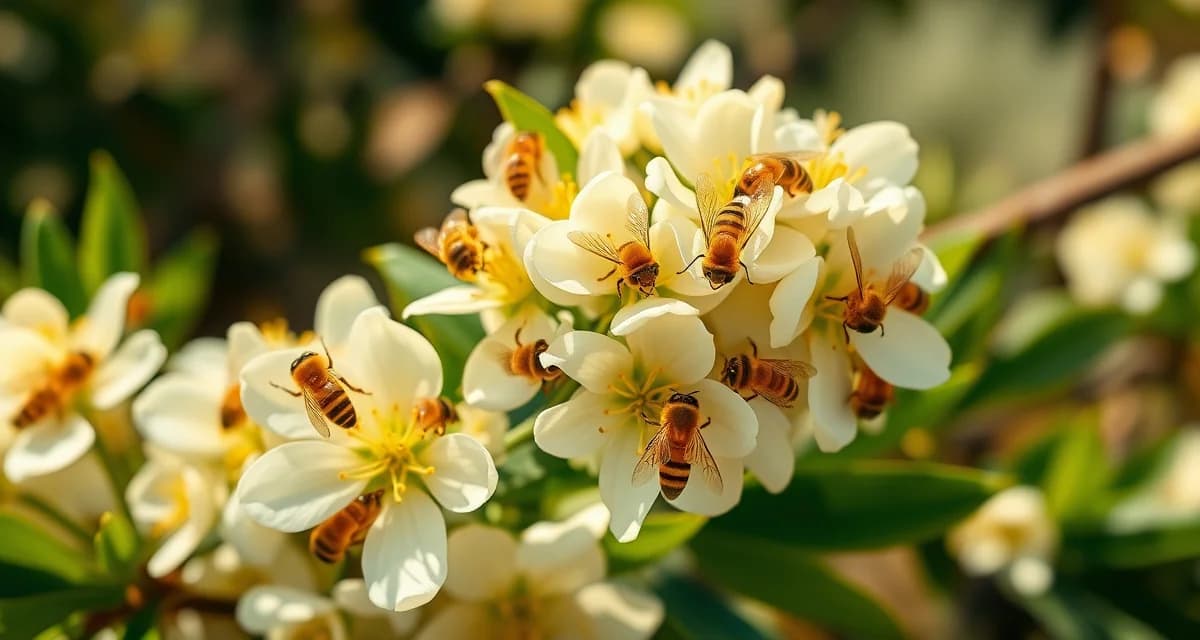
Pollination Service Management Software in Hawaii
Hawaii macadamia nut growers depend on honeybee pollination for up to 30% of their crop yield. On the Big Island and Maui, where macadamia is a primary commercial crop, that yield dependency translates directly into demand for professional pollination services.
Hawaii's commercial beekeeping environment is unlike any mainland state. The growing calendar is year-round and tropical. Bloom timing is driven by rainfall patterns and temperature cycles rather than the continental seasonal rhythm. And the state's strict biosecurity requirements mean that building a Hawaii beekeeping operation means working within the islands' existing colony base rather than importing from the mainland.
TL;DR
- Commercial beekeeping operations face two primary management challenges: operational logistics (hive health, transport, placement) and administrative coordination (contracts, payments, documentation).
- Most disputes and revenue losses in commercial beekeeping are preventable with better documentation and clearer contract terms.
- The operations that run most profitably are those with disciplined systems for tracking hive health, contract status, and fleet logistics in one place.
- PollenOps is built specifically for the operational complexity of commercial-scale pollination services, not adapted from a hobbyist tool.
- The most important management decisions (treatment timing, contract renewal, hive allocation) require accurate current data to make well.
Hawaii's Pollination Crops
Macadamia nut (Big Island, Maui):
Macadamia orchards on the Big Island's Hamakua Coast and Kona district, and in Maui's Kula area, bloom primarily from January through March, though the exact timing varies by elevation and microclimate. Bee pollination improves nut set and crop uniformity. Per-hive placement rates vary but the dependency on managed pollination is established.
Coffee (Big Island, Kauai):
Kona coffee bloom, called "Kona snow" for the white flowers that cover the trees, runs primarily from February through May on the west slopes of Hualalai and Mauna Loa. Coffee is partially self-fertile but cross-pollination by bees improves yield by 15-25%. Specialty coffee growers are increasingly aware of pollination services.
Avocado (Oahu, Maui, Big Island):
Avocado bloom in Hawaii is variable and depends on the variety and microclimate. Commercial avocado operations benefit from bee placement during their bloom windows, which run multiple times per year in Hawaii's tropical climate.
Tropical fruits:
Papaya, mango, and other tropical fruit operations provide secondary pollination opportunities, though most are smaller in scale than macadamia and coffee.
The Hawaii Beekeeping Difference
Managing a commercial beekeeping operation in Hawaii requires understanding several fundamental differences from mainland operations:
Year-round colony management: There is no winter cluster period. Colonies continue foraging, building, and swarming year-round. This means consistent management pressure without the winter break most mainland beekeepers use for recuperation.
Varroa in Hawaii: Varroa was first detected in Hawaii in 2007 on Oahu. Some neighbor islands maintained varroa-free status for years afterward, though the mite has now spread more broadly. The varroa situation on each island is different and evolving.
Small hive beetle: Small hive beetle is present throughout Hawaii and is a significant management challenge in the warm, humid climate. SHB populations that would be manageable in cooler mainland climates can destroy colonies in Hawaii's conditions.
No mainland colony imports: Hawaii's biosecurity laws prohibit importing live bee packages or queens from the mainland US. This means building Hawaii operations requires sourcing local genetics or working with what's already present. It also means mainland operators cannot easily scale up a Hawaii operation by trucking in colonies from California.
For island-specific bloom tracking and contract management, PollenOps bloom alerts for Hawaii are calibrated to each island's microclimate rather than using mainland growing degree day models. Coffee bloom alerts for the Kona Coast, for example, are separate from macadamia alerts for the Hamakua Coast.
Interstate Movement Requirements
The operative word for Hawaii is "biosecurity." The state has some of the strictest hive movement requirements in the US:
No mainland imports: Honey bees, packages, queens, and used equipment cannot be imported from the mainland US. The prohibition is absolute. This is what prevents mainland operators from simply expanding into Hawaii the way they can expand to any other state.
Inter-island movement: Movement of colonies between Hawaiian islands is controlled and requires inspection and permits. The biosecurity concern is preventing varroa and other pests from spreading to islands that may still be free of them.
Equipment: Used beekeeping equipment from the mainland cannot be imported without specific exemptions. Even used comb foundation is restricted.
Operators interested in Hawaii must build their operations from local sources. The Hawaii Department of Agriculture's Plant Industry Division manages permitting for inter-island movement.
Commercial Opportunities for Existing Hawaii Operators
For beekeepers already established in Hawaii, the commercial pollination opportunity is real. Macadamia orchards represent the largest consistent demand, particularly on the Big Island's Hamakua and Kona coasts.
Coffee growers in the specialty market are increasingly looking for documented pollination services to support their quality claims. A professional beekeeper with PollenOps documentation showing placement timing, colony strength, and contract terms can offer coffee growers something most aren't currently getting: verifiable pollination records.
For pollination contract management software that handles Hawaii's unique crop calendar, PollenOps supports macadamia, coffee, and tropical fruit as crop types with island-specific bloom timing.
Frequently Asked Questions
When does macadamia bloom in Hawaii?
Macadamia bloom in Hawaii typically runs from January through March, with the peak bloom period varying by elevation and location on each island. On the Big Island's Hamakua Coast, peak bloom is generally in February. Kona-area macadamia tends to bloom slightly differently based on the elevation and microclimate of specific orchards. Hawaii's tropical climate means that macadamia can have secondary bloom periods at other times of year, particularly at lower elevations with consistent moisture. PollenOps bloom alerts for Hawaii macadamia are calibrated to island-specific conditions rather than mainland growing degree day models.
How does commercial pollination management differ in Hawaii compared to the mainland?
The core differences are the year-round management requirement, the absence of a winter dormancy period, the presence of small hive beetle as a major pest in the warm humid climate, and the strict biosecurity restrictions that prevent mainland colony imports. There's no almond season driving a single high-value window. Instead, Hawaii operators manage a portfolio of tropical crop contracts (macadamia, coffee, avocado) across a year-round calendar. The lack of mainland import access means Hawaii operations must be built from local colony populations, which limits scale. Management intensity is higher year-round because the warm climate supports continuous colony activity, pest pressure, and swarming behavior.
What are Hawaii's strict biosecurity requirements for moving hives between islands?
Moving hives between Hawaiian islands requires a permit from the Hawaii Department of Agriculture's Plant Industry Division. The state maintains strict controls on inter-island colony movement to prevent pests and diseases from spreading to islands that may have cleaner bee populations. The permitting process involves inspection of the source colony at the origin island and compliance with the destination island's requirements. Some island pairs have established movement protocols; others have more restrictive policies. Contact the Hawaii HDOA Plant Industry Division before planning any inter-island movement. Mainland US colonies, packages, and queens cannot be imported into Hawaii at all under any permit system.
What is the difference between commercial and hobby beekeeping?
Commercial beekeeping is distinguished by scale (typically 100+ hives, often 500-5,000+), revenue source (pollination contracts and bulk honey sales rather than local honey retail), and management approach (systematic protocols applied across yards rather than individual colony attention). Commercial operators manage bees as an agricultural enterprise, with the administrative, regulatory, and logistical complexity that entails. Most commercial operators derive the majority of their income from pollination services; honey production is a supplementary revenue stream.
How many hives are needed to make commercial beekeeping a full-time income?
Most beekeeping economists put the full-time commercial threshold at 500-800 hives, assuming efficient operations management and a combination of pollination and honey revenue. At 500 hives and $200/hive for almond pollination, almond season alone generates $100,000 in gross revenue before expenses. Net margins depend on operational efficiency, but well-run operations can achieve 30-50% net margins on pollination revenue. Additional crops and honey production improve per-hive economics but require additional management capacity.
What is the annual revenue potential for a 1,000-hive commercial operation?
A 1,000-hive operation running an almond season ($200/hive) plus blueberry or apple contracts ($80-100/hive) plus summer honey production ($25-40/hive after extraction costs) can generate $300,000-360,000 in annual gross revenue. Net margins after transport, crew, equipment, and hive replacement costs typically run 25-40% for well-managed operations, putting net income at $75,000-145,000 annually. The specific number depends heavily on circuit efficiency, loss rates, and contract quality.
Try These Free Tools
Sources
- USDA Agricultural Research Service
- Bee Informed Partnership
- American Beekeeping Federation (ABF)
- American Honey Producers Association
- Project Apis m.
Get Started with PollenOps
Managing a commercial beekeeping operation involves more data, more deadlines, and more moving parts than any general-purpose tool was designed to handle. PollenOps brings contracts, yard records, health documentation, and fleet logistics together in one platform built for the realities of commercial-scale beekeeping.