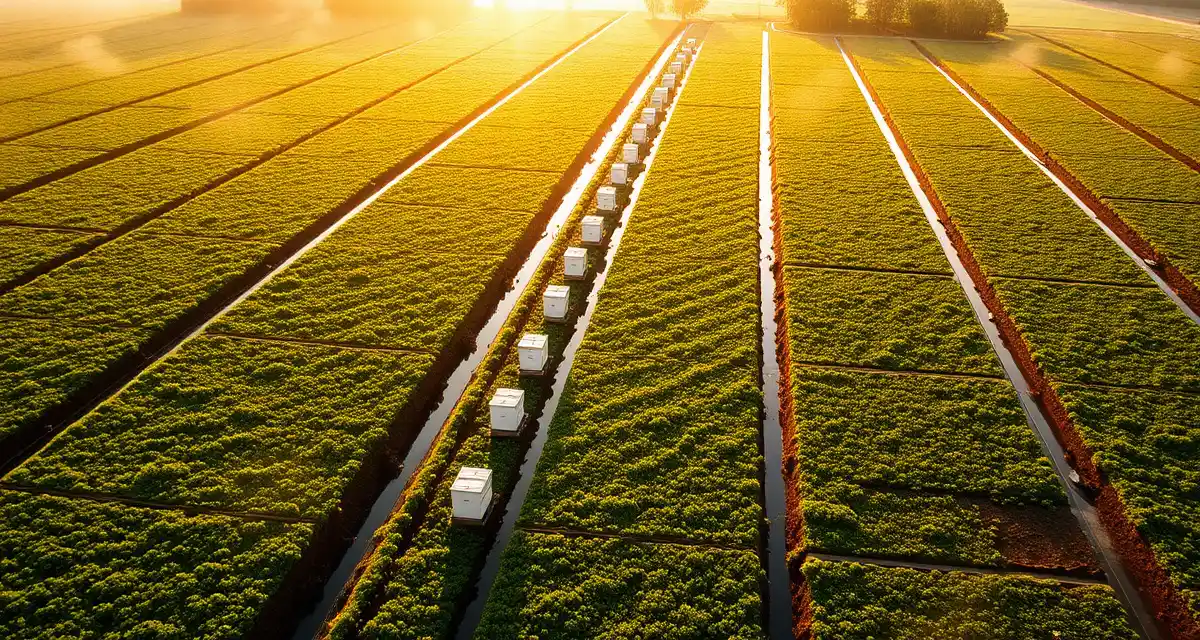
Pollination Service Management Software in Wisconsin
Wisconsin produces over 60% of all US cranberries, requiring thousands of hive placements per season. The central Wisconsin bog country, centered around Warrens, Wisconsin Rapids, and Tomah, is the heart of the US cranberry industry and one of the most concentrated commercial pollination markets in the Midwest.
Managing Wisconsin pollination contracts requires understanding cranberry bog logistics, which differ meaningfully from orchard or field placement work.
TL;DR
- Commercial beekeeping operations face two primary management challenges: operational logistics (hive health, transport, placement) and administrative coordination (contracts, payments, documentation).
- Most disputes and revenue losses in commercial beekeeping are preventable with better documentation and clearer contract terms.
- The operations that run most profitably are those with disciplined systems for tracking hive health, contract status, and fleet logistics in one place.
- PollenOps is built specifically for the operational complexity of commercial-scale pollination services, not adapted from a hobbyist tool.
- The most important management decisions (treatment timing, contract renewal, hive allocation) require accurate current data to make well.
Wisconsin's Pollination Crops
Cranberries: The defining commercial pollination crop in Wisconsin. Central Wisconsin's combination of sandy soil, natural wetlands, and reliable water access creates ideal conditions for cranberry production. Wisconsin cranberry growers typically require 2-3 hives per acre, with most contracts running for the 3-4 week bloom period in late June and early July.
Blueberries: Wisconsin is a growing commercial highbush blueberry state, with production concentrated in the central and northern parts of the state. Blueberry bloom runs late May through June, providing a potential pre-cranberry pollination opportunity.
Red clover seed: Wisconsin's dairy farming heritage creates significant red clover seed production for forage crop replanting. Red clover seed contracts require 4-6 hives per acre and bloom in June-July, overlapping with cranberry season in some regions.
Cucurbits (pickles, squash): Wisconsin is a top pickle cucumber state. Cucumber pollination contracts run through the summer, extending the season past cranberry.
When Does Cranberry Bloom Start in Wisconsin?
Wisconsin cranberry bloom timing:
- Central Wisconsin (Warrens/Wisconsin Rapids area): Late June to early July in typical years
- Northern Wisconsin cranberry areas: Can be 7-10 days later than central Wisconsin
Peak bloom typically runs for 10-14 days, with the most critical pollination window concentrated in the middle of that period. Pre-bloom placement (3-5 days before first open flowers) is the standard practice.
PollenOps cranberry pollination management tracks Wisconsin cranberry bloom separately from Massachusetts and New Jersey because the continental climate of central Wisconsin produces different bloom timing than the ocean-influenced East Coast operations.
Wisconsin Bog Logistics: What's Different
Wisconsin cranberry bogs present the same basic access challenges as other cranberry states, but at larger scale. Wisconsin operations tend to be larger than East Coast bogs, with individual growers managing hundreds or thousands of acres of cranberry production.
Key Wisconsin bog logistics:
Water management schedules: Wisconsin cranberry growers flood and drain bogs on specific schedules tied to frost protection, weed management, and harvest. Knowing when levees will be accessible for truck entry requires direct communication with each grower about their water management calendar.
Equipment road requirements: Large Wisconsin operations often have better-developed bog road networks than smaller East Coast operations, but the specific truck access points and weight limitations vary by property. Confirm access requirements before loading a full truck.
Volume of simultaneous placements: A large Wisconsin cranberry operation may need several hundred hives placed across multiple bog sections during the same week. Coordinating the logistics of multi-bog placement for a single large grower requires detailed scheduling.
Cranberry bog placement calendar syncs with water management schedules in PollenOps, so your hive delivery windows are tied to the grower's confirmed access schedule, not just the bloom timing estimate.
Documentation Requirements for Wisconsin Growers
Wisconsin cranberry growers, particularly the larger commercial operations, expect documentation of:
- Hive count delivered and placement dates
- Hive strength scores from pre-move assessment
- GPS location of each hive cluster within the bog system
- Confirmation of the service period start and end dates
Large Wisconsin cranberry operations have professional management teams with formal procurement processes. They're comparing your delivery documentation to their contract terms in the same way a California almond handler would. Coming prepared with structured delivery reports and GPS records positions you as a professional operator.
PollenOps grower-facing pollination reports generate from your field check-in data and can be sent to growers immediately after placement, meeting the documentation expectations of sophisticated grower clients.
How Do I Access Cranberry Bog Sites Safely for Hive Placement?
Safety protocol for Wisconsin bog placements:
- Confirm levee conditions before arrival: Ask the grower about water levels and levee status when scheduling, not when you arrive. Soft levees after heavy rain can be impassable for loaded trucks.
- Know your truck dimensions: Levee widths vary. Some Wisconsin bogs have roads wide enough for standard flatbeds; others require smaller trucks or ATV-based delivery from a nearby parking area.
- Establish crew briefing protocols: Brief your crew on water hazards before any bog work. The risk of a person or vehicle going into a water-filled bog section is real, especially at night.
- Plan for morning placements when possible: Levees are often firmer in the morning before afternoon heat softens wet soils.
What Documentation Do Wisconsin Growers Require for Pollination Contracts?
Wisconsin cranberry growers typically want:
- Signed written contract specifying hive count, strength minimum, service period dates, and payment terms
- Health certificate for any hives entering Wisconsin from out of state
- Wisconsin apiary registration confirmation
- Delivery record with hive count and arrival timestamp
- Pre-move strength assessment documentation
Wisconsin does not have the same county-level registration complexity as California, but state apiary registration is required, and out-of-state operators need a valid home-state health certificate.
Frequently Asked Questions
When does cranberry bloom start in Wisconsin?
Central Wisconsin cranberry bloom (Warrens and Wisconsin Rapids areas) typically starts in late June to early July. Northern Wisconsin operations may bloom 7-10 days later. Peak bloom runs for 10-14 days, with the most critical pollination period concentrated in the middle of the bloom window. PollenOps tracks Wisconsin cranberry bloom separately from other states to account for central Wisconsin's continental climate conditions.
How do I access cranberry bog sites safely for hive placement?
Confirm levee conditions with your grower before arrival, not on the day of delivery. Know your truck dimensions relative to the levee road widths on each property. Brief your crew on water hazards before any bog work. Plan for morning placements when levees are typically firmer. Have the grower's cell number handy for real-time guidance on access conditions.
What documentation do Wisconsin growers require for pollination contracts?
Most Wisconsin cranberry growers expect a signed contract with all terms specified, a delivery record with hive count and arrival timestamp, pre-move strength assessment documentation, and for out-of-state operators, a valid home-state health certificate and Wisconsin apiary registration confirmation. Larger commercial operations may require formal grower arrival reports with GPS placement confirmation.
What is the difference between commercial and hobby beekeeping?
Commercial beekeeping is distinguished by scale (typically 100+ hives, often 500-5,000+), revenue source (pollination contracts and bulk honey sales rather than local honey retail), and management approach (systematic protocols applied across yards rather than individual colony attention). Commercial operators manage bees as an agricultural enterprise, with the administrative, regulatory, and logistical complexity that entails. Most commercial operators derive the majority of their income from pollination services; honey production is a supplementary revenue stream.
How many hives are needed to make commercial beekeeping a full-time income?
Most beekeeping economists put the full-time commercial threshold at 500-800 hives, assuming efficient operations management and a combination of pollination and honey revenue. At 500 hives and $200/hive for almond pollination, almond season alone generates $100,000 in gross revenue before expenses. Net margins depend on operational efficiency, but well-run operations can achieve 30-50% net margins on pollination revenue. Additional crops and honey production improve per-hive economics but require additional management capacity.
What is the annual revenue potential for a 1,000-hive commercial operation?
A 1,000-hive operation running an almond season ($200/hive) plus blueberry or apple contracts ($80-100/hive) plus summer honey production ($25-40/hive after extraction costs) can generate $300,000-360,000 in annual gross revenue. Net margins after transport, crew, equipment, and hive replacement costs typically run 25-40% for well-managed operations, putting net income at $75,000-145,000 annually. The specific number depends heavily on circuit efficiency, loss rates, and contract quality.
Try These Free Tools
Sources
- USDA Agricultural Research Service
- Bee Informed Partnership
- American Beekeeping Federation (ABF)
- American Honey Producers Association
- Project Apis m.
Get Started with PollenOps
Managing a commercial beekeeping operation involves more data, more deadlines, and more moving parts than any general-purpose tool was designed to handle. PollenOps brings contracts, yard records, health documentation, and fleet logistics together in one platform built for the realities of commercial-scale beekeeping.