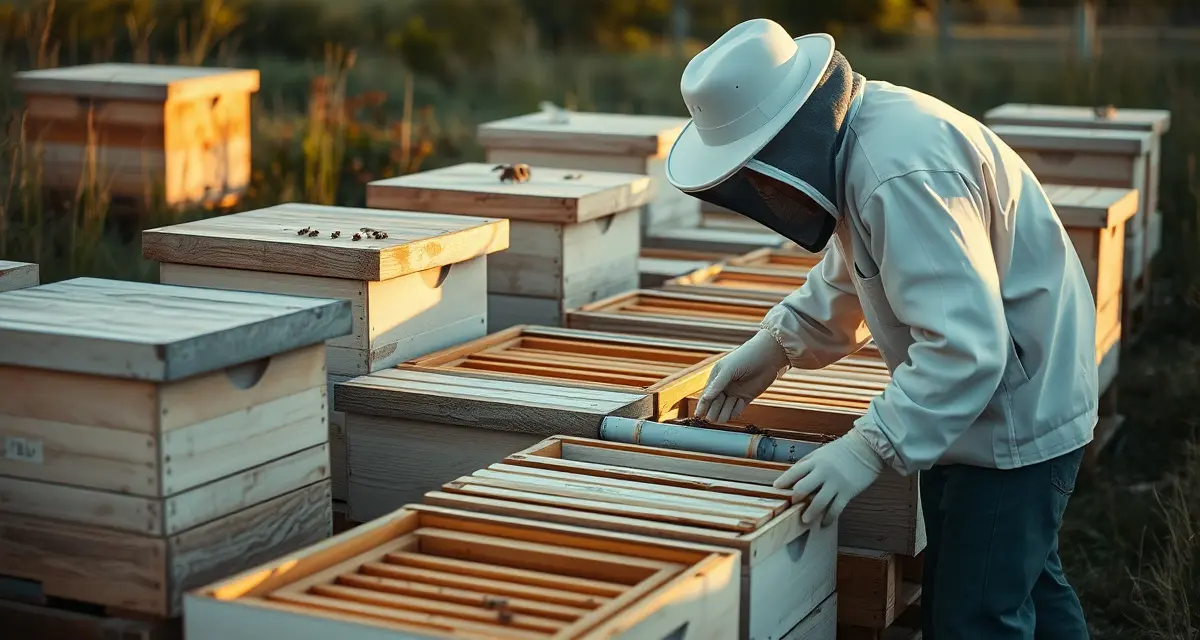
Seasonal Yard Closure Management for Migratory Beekeepers
Most beekeepers think about yard setup. Fewer think as carefully about yard closure. But what you do at the end of a contract placement, and how well you document it, has a direct impact on your invoice collection, your grower relationships, and your standing going into next season.
Post-season yard closures that lack documentation are linked to 15% of repeat contract disputes. That's not a small number, and the disputes they generate are often about things that should have been simple: whether you picked up all your hives, when you actually left the site, and whether the property was left in acceptable condition.
Getting this right starts with a systematic approach to every yard closure.
TL;DR
- Most states require a Certificate of Health or Certificate of Veterinary Inspection issued by the origin state before out-of-state colonies can enter.
- A California-to-Florida-to-Pacific-Northwest-to-Northern-Plains circuit is the most common full-year migratory route for large commercial operations.
- Interstate permit coordination requires lead time; certificates typically need to be obtained 7-30 days before entry depending on the destination state.
- Moving 1,000 hives requires 2-3 truck loads per move, with fuel, driver wages, and DOT compliance as the primary variable costs.
- Operations that plan their annual circuit 6-8 months in advance can sequence pollination contracts and honey production to maximize annual revenue per hive.
What Yard Closure Actually Means
Yard closure isn't just driving the truck in and loading hives. It's a managed end to a contractual commitment. Your grower has paid (or is about to pay) for a period of pollination service, and the closure is the official end of that service delivery.
For most contracts, closure involves:
- Removing all hives and associated equipment from the site
- Restoring the site to acceptable condition (removing water feeders, clearing debris)
- Documenting the final hive count and pickup timestamp
- Notifying the grower that hives have been removed
- Submitting any required post-season compliance reports
Some contracts, especially with large commercial growers, specify pickup timing restrictions. You may be required to leave bees in place until a certain bloom stage passes, or you may be asked to remove hives by a specific date to avoid conflicts with harvest equipment. Read your contracts before you schedule pickups.
The Documentation You Need
Your closure record should include:
Final hive count. How many hives were picked up? This should match or be explained against the delivered count. If you lost colonies during the placement period, document when they were identified and what happened.
Pickup timestamp. Time and date of removal, with GPS confirmation from your yard management platform. This is especially important if your contract has a defined service period, as you want proof you fulfilled the full term.
Site condition notes. Was the site left clean? Any damage to the property (from truck access, equipment, or other causes) should be noted and addressed before you leave.
Final photo documentation. Photos of the cleared site are your insurance against later claims that you left equipment behind or damaged the property during pickup.
Grower notification. Send a formal pickup notification to the grower. Include the hive count removed, the pickup date and time, and a brief statement that the contract service period is complete.
Connecting Closure to Your Invoice
The pickup record is also the trigger for your final invoice. Many pollination contracts structure payment around delivery and removal milestones. Your final hive count at pickup, compared to your delivered count, may affect your invoice amount if there's a contracted per-hive guarantee.
PollenOps seasonal closure management auto-generates a closure report from your final hive count and GPS pickup timestamp. That report feeds directly into your invoicing workflow, so you're not manually transferring data between systems when you're exhausted at the end of a long season.
Your yard history reporting then updates automatically to record the closure date, final hive count, and associated contract, creating a complete historical record that covers you in any future dispute.
When to Schedule Yard Closures
Timing your yard closures is both an operational and contractual question.
On the operational side, you're coordinating truck availability, driver scheduling, and your next yard's setup timing. Moving bees out of cherry orchards while simultaneously setting up for berry placements takes careful coordination.
On the contractual side, your lease at the yard location may have an end date. Your grower contract may specify a service end date. Your permit to operate at the site may expire. All of these create deadlines that need to be visible in your planning calendar.
PollenOps seasonal contract calendar tracks these end dates alongside your bloom timing data, so you can see closure scheduling conflicts before they happen. If your service period ends on April 15 but your truck is committed elsewhere until April 18, that's a problem you want to know about in March.
Closing a Yard That Isn't on Contract
Some yard closures aren't tied to pollination contracts. Winter yards, buildup yards, and transition yards all eventually need to be closed and documented. The same principles apply: document the final hive count, confirm the site is cleared, notify the landowner or property manager, and update your yard history.
Keeping a consistent closure process across all yard types means your records are uniform and searchable when you need them for state inspections, insurance claims, or grower audits.
Post-Season Reporting Requirements
Some states require notification when a seasonal apiary is closed. California, for example, requires county apiary registration updates when hives are removed from a registered location. Failing to update your registration after closure can create compliance problems the following season, when the county record still shows active hives at a location you've vacated.
Your closure process should include a step to check and update any state or county registration records affected by the move-out. This takes about five minutes and prevents administrative headaches later.
What Happens to Yard History When a Contract Closes?
Your yard history doesn't disappear when a contract ends. The placement record, hive counts, strength scores, and contract associations remain in your yard history as a permanent record.
This matters for several reasons. When a grower asks you back next season, you can pull the prior year's performance record to support your rate conversation. When a state inspector asks about hive movements, your history shows complete documentation. When you're planning routes for the following year, the history of which yards performed well and which had problems informs your site selection.
The closure is an end to the contract, not an end to the record.
Frequently Asked Questions
What do I need to document when closing a bee yard at the end of a contract?
At minimum: final hive count and pickup timestamp with GPS confirmation, site condition notes and photos, and a grower pickup notification. If your contract has a defined service period, your pickup timestamp proves you fulfilled the full term. Your closure record should also trigger any required state or county apiary registration updates.
How do I notify a grower when I have removed my hives from their property?
Send a direct message, email, or in-platform notification as soon as hives are off the site. Include the pickup date and time, the number of hives removed, and a brief confirmation that the contracted service period is complete. PollenOps generates a closure notification from your yard check-out data that you can send directly to the grower's contact on file.
What happens to my yard history when a contract closes?
Your yard history record remains intact and permanently linked to the closed contract. All hive count data, strength scores, placement records, and contract associations are preserved. This historical record supports future rate negotiations, state inspections, and grower audit requests. Only the contract status changes from active to closed.
What is the most common full-year circuit for US migratory beekeepers?
The classic commercial circuit runs: winter buildup in Florida or southern Texas, California almonds in February, Pacific Northwest tree fruit (cherry, apple, pear) in April-May, Pacific Northwest or northern Midwest berry and clover crops in June-July, summer honey production in North Dakota, Montana, or Minnesota in July-August, and fall honey extraction and requeening before the cycle restarts. The exact circuit depends on contracted commitments, hive capacity, and the operator's regional relationships.
How do you coordinate state entry permits for a multi-state circuit?
State entry permits and health certificates require lead time: most states want certificates issued 7-30 days before entry. For a circuit that crosses 5-6 states, this means overlapping certificate applications where a certificate for the next state must be initiated before the current state's placement ends. Some operators use a permit tracking calendar that accounts for the lead time required for each destination state. PollenOps includes a permit tracking feature that alerts operators when certificates need to be initiated based on planned move dates.
What are the most common mistakes new migratory operators make?
The most common errors are underestimating transport costs, failing to secure contracts before building hive capacity, not accounting for state entry permit lead times, and neglecting varroa management during the compressed pre-almond preparation period. New operators often also underestimate the administrative load of managing 10-20 contracts across multiple states -- tracking payment status, compliance documentation, and crew scheduling simultaneously requires systems, not just a spreadsheet.
Try These Free Tools
Sources
- USDA Agricultural Research Service
- Bee Informed Partnership
- American Beekeeping Federation (ABF)
- American Honey Producers Association
- USDA Animal and Plant Health Inspection Service (APHIS)
Get Started with PollenOps
Migratory operations face the most complex coordination challenges in commercial beekeeping: permits across multiple states, staggered delivery windows, and fleet logistics that have to work precisely across hundreds of miles. PollenOps was built to handle multi-state, multi-grower, multi-crop operations at this level of complexity.