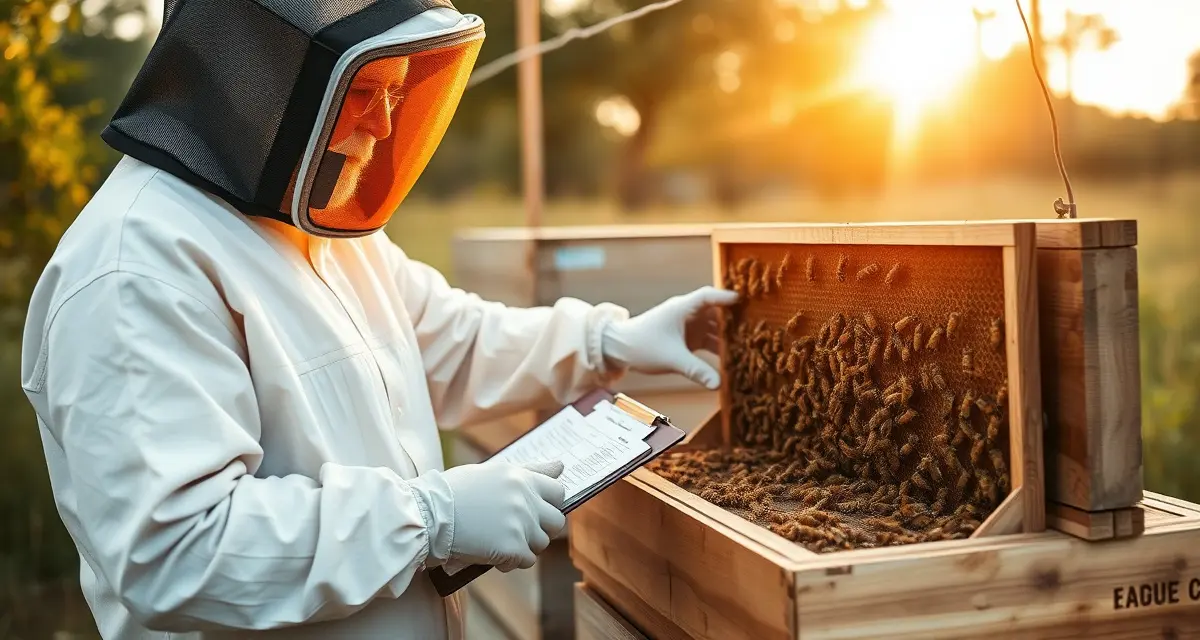
State Apiary Inspection Requirements for Commercial Beekeepers
Non-compliance with state apiary registration can result in a fine of $500 to $5,000 per violation. For a migratory commercial beekeeper operating in 4 to 6 states annually, maintaining current registration and inspection compliance in each state isn't optional. It's a legal requirement that also affects your ability to move hives across state lines and your credibility with commercial growers who require documentation of your compliance status.
Every US state has apiary regulations, but the requirements differ significantly in scope, frequency, and documentation format. Some states require annual registration with an annual state inspection; others require registration only when you intend to move hives into the state. Interstate movement almost universally requires a current certificate of inspection (health certificate) from your home state's apiary authority.
TL;DR
- Most states require a Certificate of Health or Certificate of Veterinary Inspection issued by the origin state before out-of-state colonies can enter.
- A California-to-Florida-to-Pacific-Northwest-to-Northern-Plains circuit is the most common full-year migratory route for large commercial operations.
- Interstate permit coordination requires lead time; certificates typically need to be obtained 7-30 days before entry depending on the destination state.
- Moving 1,000 hives requires 2-3 truck loads per move, with fuel, driver wages, and DOT compliance as the primary variable costs.
- Operations that plan their annual circuit 6-8 months in advance can sequence pollination contracts and honey production to maximize annual revenue per hive.
What States Require
Apiary registration: Most states require registration of your bee yards with the state department of agriculture, typically annually. Registration is usually a short form with your name, contact information, and yard locations. Fees are generally modest ($10 to $50 per year depending on state and operation size). Operating registered yards is the baseline requirement in most states; unregistered yards can result in fines and complicate movement documentation.
State inspections: Many states conduct periodic apiary inspections, either on a scheduled basis or in response to disease reports. Inspections check for American Foulbrood, European Foulbrood, Small Hive Beetle (in southern states), Varroa levels, and other regulated conditions. In some states, inspections are voluntary or by request; in others, commercial operations face mandatory inspection schedules.
Health certificates (Certificates of Inspection): Interstate movement requires a health certificate from a certified apiary inspector in your home state. The certificate attests that your colonies are free of regulated diseases as of the inspection date. Most states require certificates dated within 30 days of the move, though some require more recent documentation. The certificate must accompany the hive shipment and be available for inspection at state borders or ports of entry in regulated states.
State-by-State Overview (Key Commercial States)
California: California Department of Food and Agriculture requires a health certificate from your home state for all hive shipments entering California. California conducts entry inspections at the border, particularly during almond season when hundreds of trucks enter daily. California also requires apiary registration for operations keeping bees in the state. Africanized Honey Bee documentation requirements apply in southern California counties.
Florida: Florida Division of Plant Industry requires health certificates for all out-of-state hive imports. Florida has active state inspection programs and is particularly rigorous about Small Hive Beetle documentation given the pest's established presence in the state. Florida registration is required for operations maintaining yards in the state.
Georgia: Georgia Department of Agriculture requires a current certificate of inspection from the origin state before entry. Recent history of increased regulatory attention on incoming hives from Florida and other southeastern states. Contact Georgia's Plant Protection Division each season before moving hives in.
Michigan: Michigan requires a health certificate and advance notification before bringing hives into the state for blueberry pollination. Michigan has periodic border inspection protocols during the blueberry season. Apiary registration required for Michigan-based operations.
Washington: Washington State Department of Agriculture requires health certificates for all imported hives. Washington has active inspection programs for cherry and apple pollination seasons. Registration required for operations maintaining yards in Washington.
North Dakota: North Dakota State Department of Agriculture requires health certificates for out-of-state hive imports. Annual registration required. North Dakota has an active inspection program and is particularly vigilant about Varroa documentation.
Oregon: Oregon Department of Agriculture requires health certificates and advance notice for large commercial shipments. Oregon registration required for operations based in the state.
PollenOps Compliance Tracking
PollenOps compliance checklists track your current registration and inspection status by state. As your scheduled renewal dates approach, the compliance dashboard flags upcoming deadlines: state registration renewals, health certificate expirations, and scheduled inspection dates.
For multi-state operators, the compliance view shows your status across all states you're registered in simultaneously. A single dashboard view replaces the calendar-and-email approach of tracking renewal dates manually across multiple states.
Health certificate records upload directly to your PollenOps compliance file. When a grower or state inspector requests documentation of your inspection history, you can pull the record from PollenOps rather than searching through email or physical files.
See hive transport compliance for the full documentation of how PollenOps manages movement records. For contract compliance documentation, see contract compliance documentation.
Frequently Asked Questions
What states require apiary registration for commercial beekeepers?
All 50 US states have apiary registration requirements for commercial beekeepers, though the specific requirements vary significantly. In most states, commercial operations must register with the state department of agriculture annually, providing yard location information and contact details. Some states require registration only for apiaries above a minimum size threshold (for example, operations with more than 5 hives). States that are particularly active in commercial registration enforcement include California, Florida, Michigan, Washington, North Dakota, and Oregon, all of which have significant commercial pollination activity and active inspection programs. Contact each state's department of agriculture to confirm current registration requirements before operating in a new state, as requirements can change with legislative sessions or administrative rulemaking.
How do I get a health certificate for moving hives across state lines?
A health certificate is issued by a certified apiary inspector in your home state or the state where your hives are currently located. Contact your state's department of agriculture or extension service to find a list of certified inspectors in your area. The inspector visits your yard, examines your colonies for regulated diseases (primarily American Foulbrood, European Foulbrood, and other notifiable conditions), and issues a certificate if your colonies are free of regulated conditions. The certificate includes your name, the number of hives inspected, the inspection date, the inspector's certification number, and the destination state. Most states require the certificate to be dated within 30 days of the move, though some states require more recent inspection. Arrange inspection well before your planned move date to ensure the certificate is ready before you need to transport.
What is the penalty for failing a state apiary inspection?
Penalties for failing a state apiary inspection depend on the specific violation and the state. An apiary found positive for American Foulbrood typically triggers a quarantine order preventing any hive movement from the yard until the affected colonies are destroyed and the yard is cleared by a follow-up inspection. Moving hives under quarantine can result in criminal charges in some states in addition to civil fines. Fines for operating without registration or moving hives without proper health certificates run $500 to $5,000 per violation depending on the state, with repeated violations sometimes resulting in higher penalties or permit revocation. The non-financial cost (being blocked from moving hives during a pollination season) is often larger than the fine itself. Maintaining current compliance avoids both consequences.
What is the most common full-year circuit for US migratory beekeepers?
The classic commercial circuit runs: winter buildup in Florida or southern Texas, California almonds in February, Pacific Northwest tree fruit (cherry, apple, pear) in April-May, Pacific Northwest or northern Midwest berry and clover crops in June-July, summer honey production in North Dakota, Montana, or Minnesota in July-August, and fall honey extraction and requeening before the cycle restarts. The exact circuit depends on contracted commitments, hive capacity, and the operator's regional relationships.
How do you coordinate state entry permits for a multi-state circuit?
State entry permits and health certificates require lead time: most states want certificates issued 7-30 days before entry. For a circuit that crosses 5-6 states, this means overlapping certificate applications where a certificate for the next state must be initiated before the current state's placement ends. Some operators use a permit tracking calendar that accounts for the lead time required for each destination state. PollenOps includes a permit tracking feature that alerts operators when certificates need to be initiated based on planned move dates.
What are the most common mistakes new migratory operators make?
The most common errors are underestimating transport costs, failing to secure contracts before building hive capacity, not accounting for state entry permit lead times, and neglecting varroa management during the compressed pre-almond preparation period. New operators often also underestimate the administrative load of managing 10-20 contracts across multiple states -- tracking payment status, compliance documentation, and crew scheduling simultaneously requires systems, not just a spreadsheet.
Try These Free Tools
Sources
- USDA Agricultural Research Service
- Bee Informed Partnership
- American Beekeeping Federation (ABF)
- American Honey Producers Association
- USDA Animal and Plant Health Inspection Service (APHIS)
Get Started with PollenOps
Migratory operations face the most complex coordination challenges in commercial beekeeping: permits across multiple states, staggered delivery windows, and fleet logistics that have to work precisely across hundreds of miles. PollenOps was built to handle multi-state, multi-grower, multi-crop operations at this level of complexity.