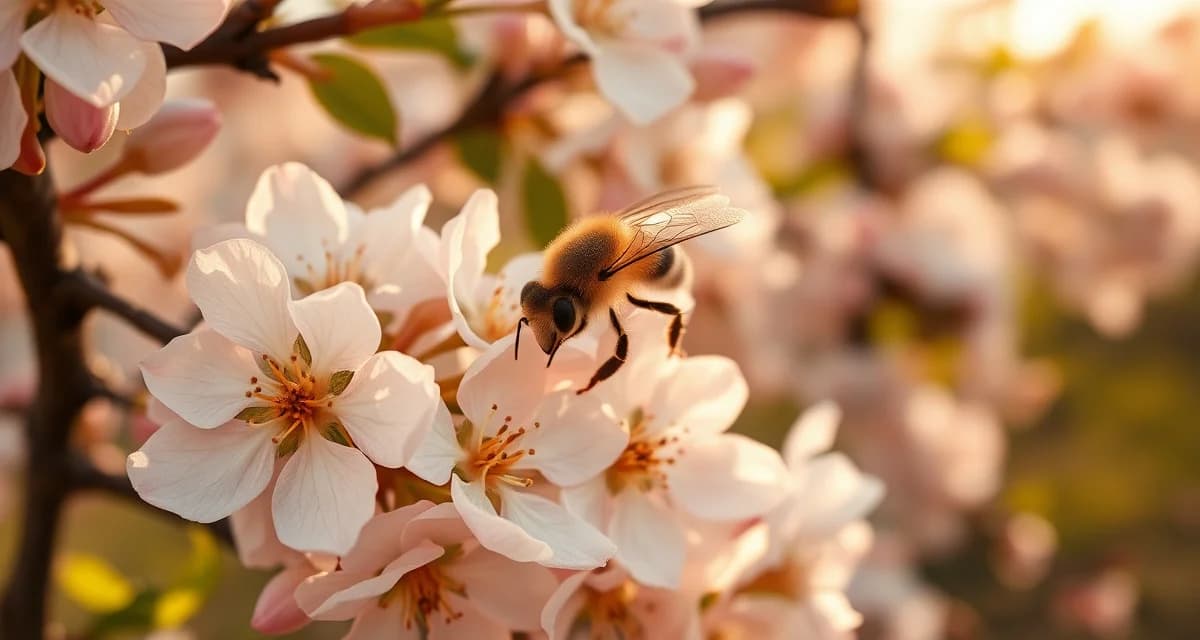
How Pollination Timing Affects Crop Yield
A 3-day delay in hive placement during peak almond bloom can reduce nut set by up to 15%. That's three days. The window for maximum pollination effectiveness in almonds is measured in days, not weeks, and the yield consequences of missing it are permanent for that season's crop.
For commercial beekeepers, this isn't just a grower problem. Yield shortfalls from late delivery or mis-timed placement damage your grower relationships, invite contract disputes, and threaten renewal rates. Understanding the yield impact of pollination timing makes the case for bloom alerts, precise delivery scheduling, and the kind of professional documentation that shows growers you take timing seriously.
TL;DR
- Commercial beekeeping operations face two primary management challenges: operational logistics (hive health, transport, placement) and administrative coordination (contracts, payments, documentation).
- Most disputes and revenue losses in commercial beekeeping are preventable with better documentation and clearer contract terms.
- The operations that run most profitably are those with disciplined systems for tracking hive health, contract status, and fleet logistics in one place.
- PollenOps is built specifically for the operational complexity of commercial-scale pollination services, not adapted from a hobbyist tool.
- The most important management decisions (treatment timing, contract renewal, hive allocation) require accurate current data to make well.
The Biology of Bloom Timing
Pollination happens when pollen is transferred from one almond variety's flower to another's stigma during the brief period when flowers are receptive. Almond flowers are receptive for approximately 3-7 days after opening. After that window, the flower is no longer pollination-capable regardless of bee activity.
Peak bloom in almonds runs approximately 7-10 days from 10% bloom (first flowers open) to 80-90% bloom. The highest pollen receptivity is in the middle of that window, roughly days 3-7.
Hives placed before bloom starts allow bee colonies to orient to the orchard, establish foraging patterns, and hit their peak foraging activity during the highest-receptivity period. Hives placed at 50% bloom are starting from scratch during the most valuable pollination window.
Research published by UC Davis and the Almond Board of California has consistently shown that late-placed colonies produce lower cross-pollination rates and reduced nut set. The 15% yield reduction from a 3-day delay at peak bloom is a conservative estimate from mid-range conditions.
Crop-by-Crop Timing Impact
Almonds
Almond is the most researched crop for pollination timing. Key findings:
- Hives placed at 5-10% bloom maximize cross-pollination during peak receptivity
- Placement at 25%+ bloom reduces pollination effectiveness measurably
- A 3-day delay during peak bloom reduces nut set by 10-15%
- A 7-10 day delay can reduce nut set by 20-30%
The yield consequence at commercial scale is significant. A 1,000-acre almond operation yielding 2,200 lbs/acre generates $1.56 million at $0.70/lb. A 15% yield reduction is $234,000. A grower who traces that loss to late bee placement has a documented grievance.
Cherries
Cherry has the narrowest bloom window of any major pollination crop. The effective window for cherry pollination is typically 7-14 days, with peak receptivity concentrated in days 4-10.
Late cherry delivery, even by 2-3 days, can noticeably reduce fruit set. Cherry growers are often the most attentive to delivery timing of any client type, because the consequences are visible in the finished fruit and the window for correction doesn't exist.
Research suggests 10-20% reduction in cherry set from delivery delayed more than 3 days past optimal placement timing.
Blueberries
Blueberry bloom extends over a longer period (3-4 weeks for highbush varieties), which provides more timing flexibility than almonds or cherries. But the opening bloom period still has higher receptivity than later bloom stages.
For commercial blueberry operations, hive placement at or before first bloom is recommended. Placement during the last third of bloom reduces benefit measurably. Studies from Michigan State University have shown 8-12% reductions in berry set from late placement.
Apples
Apple bloom lasts 2-3 weeks and is more forgiving of timing variation than almonds or cherries. However, early season apple varieties (like Gala) have shorter individual variety bloom windows that are more sensitive to timing.
Placement before or at first bloom remains the best practice. Late placement in apple orchards reduces nut set by 5-15% depending on variety and conditions.
Cucurbits (Watermelon, Melon, Cucumber)
Cucurbits require daily visits by bees for pollination, because individual flowers are only receptive for one day. The timing sensitivity is different from tree fruit: you need sustained bee presence throughout the flowering period (3-6 weeks) rather than peak presence during a single bloom event.
For cucurbits, the yield impact of underpopulated placement is spread over the season rather than concentrated at a peak event. But missing the first week of bloom consistently reduces total fruit set.
How Bloom Alerts Protect Your Timing
The bloom timing alerts in PollenOps fire based on NOAA weather data and USDA growing degree day models calibrated for each crop and region. The alerts are designed to give you 7-14 days advance notice before predicted bloom.
That 7-14 day window is exactly what you need to:
- Confirm colony strength is at contract-ready level
- Coordinate delivery logistics (truck routing, crew scheduling)
- Communicate delivery timing to your grower
- Get health certificates and permits in order for interstate movement
Beekeepers who use bloom alerts consistently hit delivery windows more accurately than those who rely on grower notification or annual experience. The alerts also document your decision-making: if bloom arrived unusually early and your delivery was delayed as a result, the alert timestamps provide evidence that you were responding to actual conditions, not negligence.
The Professional Case to Growers
Growers who understand the yield impact of timing pay for early placement reliability. Your ability to demonstrate:
- You use data-driven bloom prediction tools
- Your delivery timing is documented to the day
- Your colony strength at delivery is verified
...commands higher rates than a beekeeper who shows up "around bloom time." The almond pollination timing software integration in PollenOps is the tool that makes this case to growers at contract negotiation time.
Frequently Asked Questions
How much does late hive placement affect almond yield?
Research consistently shows that hive placement delayed past 25% bloom reduces almond nut set measurably. A 3-day delay at peak bloom can reduce nut set by 10-15%. A full week's delay can reduce nut set by 20-30% in some conditions. The effect is cumulative and permanent for the current season. There is no way to recover lost pollination from the early bloom period by adding more bees later. For a grower, a 15% yield reduction on a 1,000-acre almond operation represents hundreds of thousands of dollars in lost crop value. Placement before 10% bloom and full bee activity during peak bloom is the standard that protects both your grower's yield and your contract relationship.
What is the optimal hive placement timing for maximum cherry crop set?
Cherry hive placement should occur before 10% bloom or as early as 5% bloom in orchards with multiple varieties (which can have staggered opening times). Cherries have a short, compressed bloom window of 7-14 days, and peak receptivity runs from roughly day 4 to day 10 of the bloom period. Hives placed at the beginning of bloom establish foraging patterns and reach peak forager activity during the highest-receptivity period. Placement at 30-50% bloom means colonies start from zero during the period when the orchard needs maximum foraging pressure. Late cherry placement is one of the most common sources of grower complaints and contract disputes in Pacific Northwest operations.
How does PollenOps help me hit the ideal bloom timing window every season?
Get Started with PollenOps
Managing a commercial beekeeping operation involves more data, more deadlines, and more moving parts than any general-purpose tool was designed to handle. PollenOps brings contracts, yard records, health documentation, and fleet logistics together in one platform built for the realities of commercial-scale beekeeping.
What is the difference between commercial and hobby beekeeping?
Commercial beekeeping is distinguished by scale (typically 100+ hives, often 500-5,000+), revenue source (pollination contracts and bulk honey sales rather than local honey retail), and management approach (systematic protocols applied across yards rather than individual colony attention). Commercial operators manage bees as an agricultural enterprise, with the administrative, regulatory, and logistical complexity that entails. Most commercial operators derive the majority of their income from pollination services; honey production is a supplementary revenue stream.
How many hives are needed to make commercial beekeeping a full-time income?
Most beekeeping economists put the full-time commercial threshold at 500-800 hives, assuming efficient operations management and a combination of pollination and honey revenue. At 500 hives and $200/hive for almond pollination, almond season alone generates $100,000 in gross revenue before expenses. Net margins depend on operational efficiency, but well-run operations can achieve 30-50% net margins on pollination revenue. Additional crops and honey production improve per-hive economics but require additional management capacity.
What is the annual revenue potential for a 1,000-hive commercial operation?
A 1,000-hive operation running an almond season ($200/hive) plus blueberry or apple contracts ($80-100/hive) plus summer honey production ($25-40/hive after extraction costs) can generate $300,000-360,000 in annual gross revenue. Net margins after transport, crew, equipment, and hive replacement costs typically run 25-40% for well-managed operations, putting net income at $75,000-145,000 annually. The specific number depends heavily on circuit efficiency, loss rates, and contract quality.
Try These Free Tools
Sources
- USDA Agricultural Research Service
- Bee Informed Partnership
- American Beekeeping Federation (ABF)
- American Honey Producers Association
- Project Apis m.