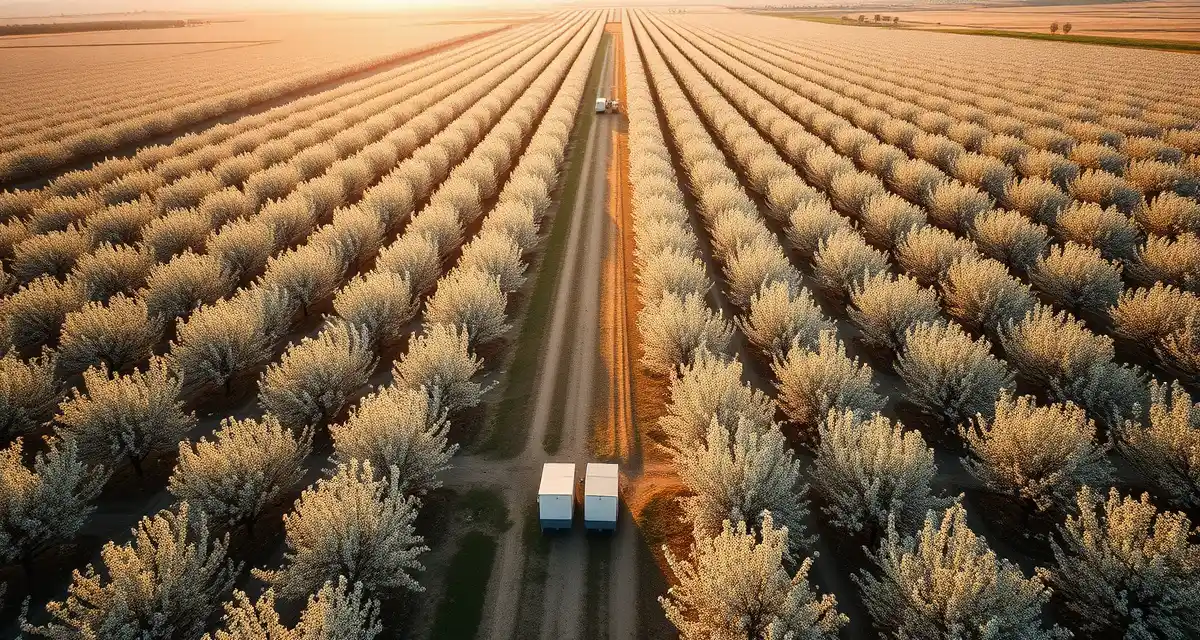
Almond Pollination in Stanislaus County: Northern San Joaquin Valley
Stanislaus County sits in the northern portion of the San Joaquin Valley, and its almond acreage has grown substantially over recent decades. The county is now one of the major almond production regions in California, offering significant contract opportunities for commercial beekeepers who work the northern valley circuit.
Northern San Joaquin Valley almonds bloom 5 to 7 days after southern counties like Kern County, which means Stanislaus County typically sees full bloom between February 15 and February 22 in a normal year. For operators who run a sequential placement strategy, Stanislaus can follow a Kern County or southern Fresno County placement, extending revenue without moving additional hives.
TL;DR
- California almond pollination consumes roughly 80% of the US commercial hive population every February, making it the most supply-constrained pollination market in the country.
- Per-hive rates have held between $185 and $220 for 6-8 frame colonies over recent seasons.
- Contracts are typically signed October through November for the following February season; operators without agreements by December are working from a weak position.
- Hive strength minimums range from 6 to 8 frames of bees depending on the grower, with premium-strength colonies commanding $200-215/hive.
- varroa management, documentation, and logistics coordination in the 6-8 weeks before delivery determine whether almond season is profitable or a breakeven event.
The Northern Valley Advantage
The northern San Joaquin Valley, including Stanislaus and neighboring Merced and San Joaquin counties, has historically been the most concentrated almond production area in California. The region around Turlock, Modesto, and the Highway 99 corridor has a long history with almond production, and the grower community here is experienced and often has established relationships with beekeeping contractors.
Breaking into established northern valley grower relationships takes time. Many Stanislaus County growers have had the same beekeeper for 10 or 15 years. That's a barrier to entry for new operators, but it also means that growers who've had a contractor fail them are actively looking for reliable alternatives. Positioning your operation as a dependable, professional contractor is the path in.
The San Joaquin Valley almond market operates as an interconnected whole, and understanding how Stanislaus County fits into the northern valley cluster helps you plan a complete California circuit.
Contract Landscape
Stanislaus County contracts run the full spectrum from small family operations needing 50 to 150 hives to large almond management companies working thousands of acres. The Modesto-area grower community includes both independent family farmers and orchard management companies that manage contracts across multiple growers.
Orchard management companies can be efficient partners because one relationship can yield multiple placement sites, but they also have more experience negotiating with beekeepers and may push harder on rate and strength verification than individual growers.
Rates in Stanislaus County track the broader California almond market, generally $150 to $225 per hive in recent seasons. Colony strength requirements mirror the rest of the valley, with most growers specifying 6 frames of bees as a minimum, and premium contract growers often requiring 8 frames.
Comparing Stanislaus to Fresno County
Both counties are major almond markets, but there are some differences worth understanding. Stanislaus County's road network in almond country is generally good, with the Highway 99 corridor providing efficient north-south access. Fresno County is larger in total almond acreage, but Stanislaus has a more compact production geography that can simplify logistics.
For operators evaluating where to focus California contract development, Fresno County and Stanislaus County often appear together as complementary parts of a complete San Joaquin Valley strategy. Working both with a sequential timing approach is achievable for operators with 500 or more hives.
Logistics and Infrastructure
The Turlock and Modesto areas have well-developed agricultural infrastructure, including equipment dealers, truck scales, and repair shops familiar with agricultural operations. This makes it easier to manage mechanical issues during almond season compared to more remote growing areas.
Bee yards in Stanislaus County typically have reasonable truck access, though the almond blocks in the western part of the county near the valley floor can have heavier Tule fog during February. Factor weather-related delays into your delivery schedule.
Regulations
California's apiary registration and entry requirements apply in Stanislaus County the same as anywhere in the state. Out-of-state operators must have current California apiary registration and proper health certificates. California Department of Food and Agriculture oversight of commercial apiaries is consistent across all counties.
Frequently Asked Questions
What almond pollination opportunities exist in Stanislaus County?
Stanislaus County has significant almond acreage with a full range of contract sizes from small family farms to large managed orchard operations. The county is part of the northern San Joaquin Valley cluster and has been a core almond production region for decades. For commercial beekeepers building a California contract portfolio, Stanislaus County is a high-value target market with consistent demand, established infrastructure, and good logistical access from Highway 99.
How does Stanislaus County compare to Fresno for contract availability?
Fresno County has somewhat more total almond acreage, but Stanislaus County is a comparable market with equally strong contract opportunities. The northern valley location means slightly later bloom timing than Fresno, which helps for sequential placement strategies. Stanislaus has a more geographically compact production area, which can reduce driving time between placements. Competition for Stanislaus County grower relationships is similar to Fresno, with established operators holding most of the major contracts. New contractors should focus on smaller growers initially.
When does almond bloom start in Stanislaus County?
Stanislaus County almonds typically reach full bloom between February 15 and February 22 in an average year, 5 to 7 days after the southern San Joaquin Valley counties. Non-pareil almonds, the most widely planted variety, tend to bloom in the middle of this window. Cold or warm spells can shift bloom timing by up to a week. Operators should plan hive delivery for 5 to 7 days before anticipated full bloom, which in Stanislaus County typically means delivery in the February 8 to 15 window. Stay in contact with your Stanislaus County growers through January for updates on bloom progression estimates.
How early should almond pollination contracts be negotiated?
Large almond growers and broker networks begin securing hive commitments in July and August for the following February season. Written contracts are typically signed October through November. Operators who do not have signed agreements by December are working from a weak position since most quality hive inventory is already committed. Start grower outreach in mid-summer and target signed agreements before Thanksgiving.
What documentation is required for hive delivery to California almonds?
California requires a Certificate of Health for out-of-state colonies, issued by the origin state's apiary inspection program within 30 days of entry. The certificate must certify freedom from American foulbrood, European foulbrood, and Varroa destructor below treatment threshold. Some states require small hive beetle freedom for California entry. In addition, many growers now expect documentation of pre-delivery mite counts confirming colonies are below threshold.
What happens to hives after almond season ends in late March?
Post-almond options include moving north for Pacific Northwest cherry or apple pollination in April-May, routing to Michigan or Maine blueberries in May-July, transitioning to summer honey yards in North Dakota or Montana, or staying in California for splits and rebuilding. The right choice depends on hive strength coming out of almonds and downstream contract commitments. Operators who plan their full-year circuit in advance can optimize both pollination revenue and honey production.
Try These Free Tools
Sources
- USDA Agricultural Research Service
- Bee Informed Partnership
- American Beekeeping Federation (ABF)
- Almond Board of California
- University of California Cooperative Extension
Get Started with PollenOps
Almond season is the revenue event that defines the commercial beekeeping year, and the details -- contract terms, delivery timing, hive strength documentation, and invoicing -- determine whether the season is profitable. PollenOps manages the full almond contract lifecycle from quote to final payment, with yard tracking, crew scheduling, and grower communication built in. See how it works for operations from 200 to 5,000 hives.