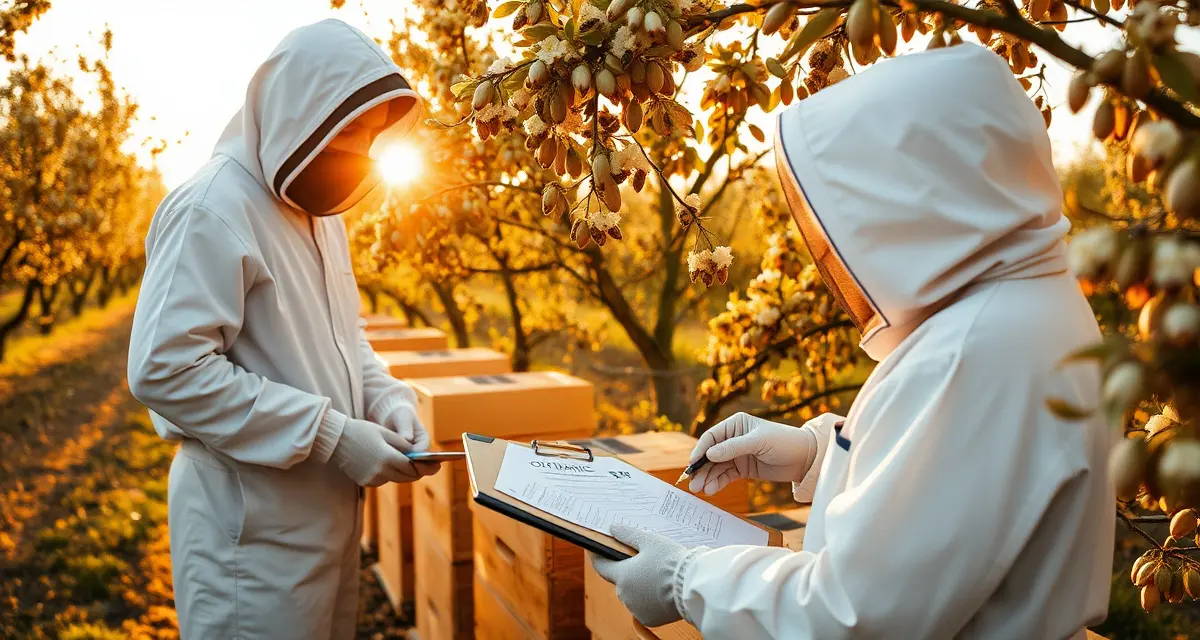
Organic Almonds and Pollination: What Beekeepers Need to Know
Organic almond acreage has grown more than 200% over the past decade, and it represents a growing premium contract market for commercial beekeepers who understand the documentation and compliance requirements. The contract rates are higher than conventional almond pollination, but the requirements are more demanding. Organic almond growers require beekeepers to document that treatment protocols comply with National Organic Program (NOP) standards, and they may require third-party certification of your management practices.
The difference between earning organic-rate contracts and conventional-rate contracts from the same grower often comes down to your documentation system. Growers who want to certify their pollination operation as organic-compliant need a paper trail from you.
TL;DR
- California almond pollination consumes roughly 80% of the US commercial hive population every February, making it the most supply-constrained pollination market in the country.
- Per-hive rates have held between $185 and $220 for 6-8 frame colonies over recent seasons.
- Contracts are typically signed October through November for the following February season; operators without agreements by December are working from a weak position.
- Hive strength minimums range from 6 to 8 frames of bees depending on the grower, with premium-strength colonies commanding $200-215/hive.
- Varroa management, documentation, and logistics coordination in the 6-8 weeks before delivery determine whether almond season is profitable or a breakeven event.
What Organic Almond Growers Require
Organic certification under USDA NOP applies to the crop, not the bees. Bees themselves are not certified organic under the current NOP structure. However, organic almond growers need to demonstrate that inputs used in their certified organic system, including rented pollinators, comply with the National List of Allowed and Prohibited Substances.
In practice, this means growers want to know:
What treatments were used in your colonies within a specified period before placement. Most organic growers will ask about treatment history covering the 90 to 120 days before placement. Synthetic acaricides (Apivar/amitraz, Checkmite/coumaphos) are prohibited. Organically permitted options include oxalic acid, formic acid, and thymol-based treatments.
Whether any prohibited substances were used in feeding or other management. Antibiotics (oxytetracycline, tylosin) are generally prohibited in organic systems. Fumidil-B for nosema, if used, may be prohibited.
Documentation of your treatment records. The documentation requirement is what separates organic contracts from conventional ones. It's not enough to say you use organic-compliant treatments; you need records that demonstrate it for the relevant period.
Treatment Restrictions for Organic Orchard Pollination
Working organic orchards requires that your treatment program be designed around organic-compliant options for the 90 to 120 days before delivery. If you treated with Apivar in the fall and your colonies are going to organic almond orchards in February, you have a documentation problem.
Organically permitted varroa treatments that work at commercial scale include:
Oxalic acid (dribble, vaporization, or extended-release strips): OA vaporization and Apilife/Apivital extended-release options are OMRI-listed and NOP-compliant. These form the backbone of organic-compliant varroa programs at commercial scale.
Formic acid (Mite-Away Quick Strips, FormicPro): Also organic-compliant and effective against varroa in capped brood. Timing restrictions apply.
Thymol-based products (Apiguard, Api Life Var): Effective in appropriate temperature ranges and NOP-compliant.
Designing your treatment calendar around organic-compliant options, particularly in the fall preceding an organic almond season, is the practical requirement for accessing this contract segment.
For an overview of commercially practical varroa treatment approaches, see the varroa management guide for large operations and the organic honey certification requirements.
Documentation for Organic Compliance
The documentation that organic almond growers want from you typically includes:
- A treatment log showing all colony treatments for the 90 to 120 day pre-placement period
- Product names, active ingredients, and application dates
- The regulatory status (OMRI-listed, NOP-compliant) of each product used
- Feeding and supplement records if relevant
- Your state apiary registration documentation
Some growers or their organic certifiers may ask for a written attestation from you regarding compliance with NOP standards for the pollination services provided. This is essentially a declaration that to the best of your knowledge, your management practices during the relevant period were NOP-compatible.
Keep these records in your standard colony management system so they're retrievable when a grower asks. Reconstructing treatment histories after the fact creates questions about their reliability.
Pricing for Organic Contracts
Organic almond pollination contracts typically command a premium of $20 to $50 per hive above conventional rates, reflecting the additional management and documentation requirements. For a 500-hive placement in organic orchards, that premium represents $10,000 to $25,000 in additional revenue.
The premium is justified if you're already using organic-compliant treatments in your program. Operators who use conventional synthetic treatments as their primary varroa management tool face a real transition cost to shift to organic-compliant alternatives. Evaluate whether the contract premium outweighs the treatment cost differential and management complexity for your specific operation.
Frequently Asked Questions
Do organic almond growers have special requirements for pollinators?
Yes. Organic almond growers need to demonstrate that their certified organic system's inputs, including rented bee colonies, are managed in compliance with National Organic Program standards. They require documentation showing that prohibited substances (synthetic acaricides, certain antibiotics) were not used in your colonies during the 90 to 120 days before placement. Bees themselves are not certified organic under current NOP rules, but the management practices applied to them must be NOP-compatible for the period relevant to the organic crop certification. Growers may also ask for written attestation of your compliance.
What treatment restrictions apply when pollinating organic orchards?
When pollinating organic almond orchards, your colony management for the 90 to 120 days before placement must avoid prohibited substances. Prohibited materials include synthetic acaricides like amitraz (Apivar) and coumaphos (Checkmite). Permitted options include oxalic acid (all application methods), formic acid (Mite-Away Quick Strips, FormicPro), and thymol-based products (Apiguard, Api Life Var). Your feeding programs and any other colony treatments must also avoid prohibited substances. Building your fall varroa treatment schedule around organic-compliant options is the practical starting point for accessing organic almond contracts.
How do you document compliance for organic orchard pollination?
Maintain a treatment log for each colony or colony group showing all treatments applied in the 90 to 120 days before organic almond placement. Record product names, OMRI-listed status, active ingredients, and application dates. Keep feeding and supplement records if applicable. Store these records in your regular colony management system so they're retrievable when a grower or certifier requests them. Some organic growers or their third-party certifiers will ask for a written compliance statement from you. Having accurate treatment records is the foundation of this statement. Retroactive record reconstruction raises credibility questions; contemporaneous records do not.
How early should almond pollination contracts be negotiated?
Large almond growers and broker networks begin securing hive commitments in July and August for the following February season. Written contracts are typically signed October through November. Operators who do not have signed agreements by December are working from a weak position since most quality hive inventory is already committed. Start grower outreach in mid-summer and target signed agreements before Thanksgiving.
What documentation is required for hive delivery to California almonds?
California requires a Certificate of Health for out-of-state colonies, issued by the origin state's apiary inspection program within 30 days of entry. The certificate must certify freedom from American foulbrood, European foulbrood, and Varroa destructor below treatment threshold. Some states require small hive beetle freedom for California entry. In addition, many growers now expect documentation of pre-delivery mite counts confirming colonies are below threshold.
What happens to hives after almond season ends in late March?
Post-almond options include moving north for Pacific Northwest cherry or apple pollination in April-May, routing to Michigan or Maine blueberries in May-July, transitioning to summer honey yards in North Dakota or Montana, or staying in California for splits and rebuilding. The right choice depends on hive strength coming out of almonds and downstream contract commitments. Operators who plan their full-year circuit in advance can optimize both pollination revenue and honey production.
Try These Free Tools
Sources
- USDA Agricultural Research Service
- Bee Informed Partnership
- American Beekeeping Federation (ABF)
- Almond Board of California
- University of California Cooperative Extension
Get Started with PollenOps
Almond season is the revenue event that defines the commercial beekeeping year, and the details -- contract terms, delivery timing, hive strength documentation, and invoicing -- determine whether the season is profitable. PollenOps manages the full almond contract lifecycle from quote to final payment, with yard tracking, crew scheduling, and grower communication built in. See how it works for operations from 200 to 5,000 hives.