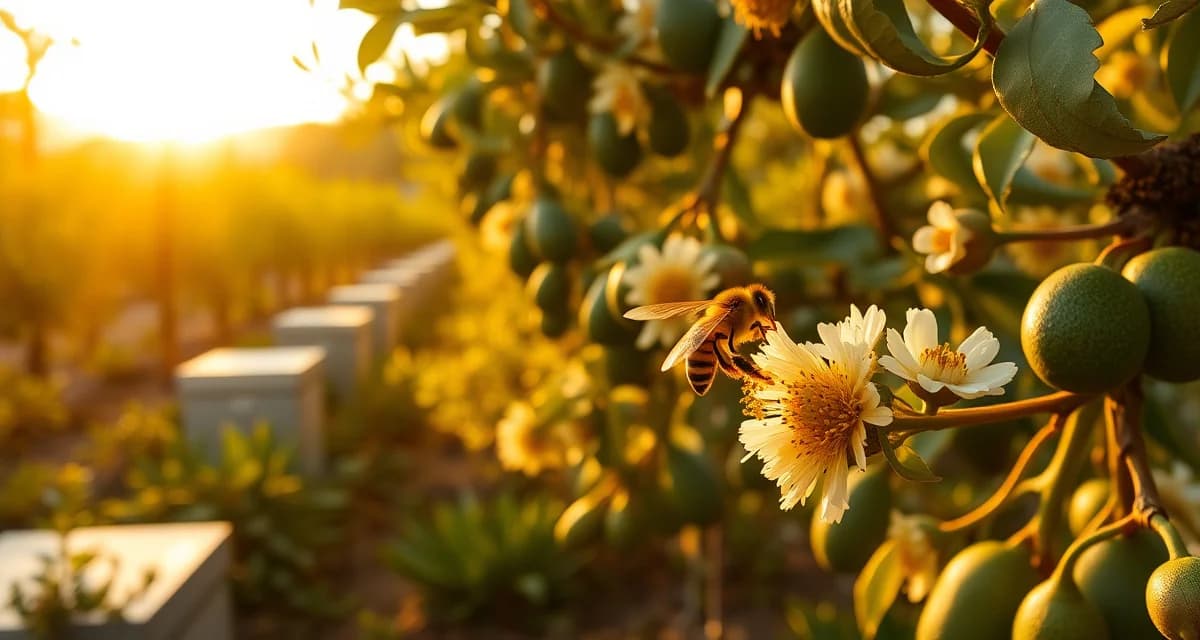
Avocado Pollination in California: Ventura and San Diego County Guide
California's 50,000-plus avocado acres concentrate primarily in San Diego and Ventura counties, with smaller acreage in Riverside, Santa Barbara, and Los Angeles counties. Avocado is a unique pollination crop because of its Type A and Type B flower synchrony, where individual trees produce male and female flowers at different times of day to promote outcrossing. Effective pollination requires bee activity during both morning and afternoon flower opening periods across multiple days.
Avocado bloom runs February through April, creating a logistics challenge: this window overlaps directly with California almond season. For operators running almond contracts in the Central Valley, adding avocado contracts in coastal Southern California requires either splitting your fleet or running a sequential schedule that transitions hives from inland almonds to coastal avocado as almond bloom completes.
TL;DR
- California's primary commercial beekeeping role is shaped by its crop mix, climate, and position on the national pollination circuit.
- Pollination rates in California range $65-220/hive depending on crop depending on crop and colony strength requirements.
- Out-of-state operators entering California for pollination contracts must register with the state agricultural authority and obtain a Certificate of Health.
- California functions as either a primary pollination destination, a seasonal honey production location, or a transitional stop depending on the circuit.
- Tracking permit status, registration documents, and yard records for California operations requires organized record-keeping before the season opens.
Avocado Flower Biology and Pollination Requirements
Avocado flowers are protogynous dichogamous, meaning each flower opens in two phases separated by a period of closure. In the first phase, the flower functions as a female (receptive pistil). After closing and reopening, it functions as a male (releasing pollen). Type A trees cycle on a morning female/afternoon male schedule; Type B trees are the reverse.
Cross-pollination between Type A and Type B trees improves fruit set over self-pollination, and bee activity is essential for moving pollen between trees during the appropriate overlap windows. Well-managed honey bee colonies foraging throughout the day provide cross-pollination coverage that native bees and wind cannot match at commercial orchard scale.
The practical implication for beekeepers: your colonies need to be actively foraging during both morning and afternoon periods. Strong colonies with high population and good foraging drive are more effective than weaker colonies that may reduce foraging activity during cooler coastal morning hours. Hive strength matters more for avocado than for some other crops because the flower timing is so specific.
Getting Avocado Contracts in San Diego County
San Diego County is the largest avocado-producing county in California, with production concentrated in the inland valleys and hills of North County, including Fallbrook, Valley Center, Escondido, and Ramona. The California Avocado Commission and the San Diego County Farm Bureau are your primary grower organization contacts.
Fallbrook, which calls itself the Avocado Capital of the World, has a tight-knit grower community where word of mouth drives supplier selection significantly. Your first San Diego County avocado relationship is the key to others. If you can get a strong first-season reference from a respected Fallbrook grower, expect multiple referrals to follow.
Cold outreach should target operations over 20 acres since smaller hobby-scale avocado groves often don't contract for pollination. Lead with your hive strength documentation and the A/B synchrony awareness that distinguishes a professional avocado pollination proposal from a generic beekeeping pitch. Use PollenOps avocado contract management to generate a proposal that addresses variety-specific bloom timing and documents your delivery and inspection process.
Getting Avocado Contracts in Ventura County
Ventura County's avocado production is concentrated in the Santa Paula, Fillmore, and Ojai Valley areas, with some production in the coastal hills near Ventura and Oxnard. The Ventura County Farm Bureau and local avocado grower associations serve this market. Ventura County avocado bloom tends to run slightly earlier than San Diego County in most years due to its warmer inland valley locations relative to San Diego's more moderated coastal climate.
The Ventura County market overlaps geographically with the Santa Barbara County wine grape and strawberry production areas, creating a potential multi-crop route for operators covering coastal Southern California.
Managing the Almond-Avocado Conflict
The February through April overlap between almond and avocado seasons is the central operational challenge for operators who want contracts in both markets. If you're running a large enough fleet, you can allocate separate hive pools to each crop: your strongest colonies to almond at $180 to $220 per hive, and a subset to avocado at $130 to $180 per hive.
If your fleet isn't large enough to do both simultaneously, consider sequencing: run almond through mid-February in the early-blooming Kern County and southern San Joaquin areas, then transition some hives to avocado as almond winds down in late February and early March. This requires geographic positioning and route planning that accounts for the drive time between the Central Valley and coastal Southern California.
Track your available hive inventory and contracted obligations through PollenOps almond pollination tools and your avocado contracts simultaneously to identify where your capacity actually sits before committing to both.
Colony Strength Requirements
California avocado growers typically require 6 to 8 frames of bees at delivery, with some commercial operations requesting 8-frame minimums for their largest and most valuable blocks. The A/B synchrony requirement for active cross-pollination throughout the day means foraging drive and worker population matter more than for some other crops.
Coastal Southern California microclimates can be cool and foggy in the mornings during avocado bloom, which reduces bee flight activity during the critical morning female-phase window for Type A trees. Strong colonies tolerate these conditions better than weaker ones. If you're placing hives in coastal locations, the strength requirement matters more than for inland valley placements where morning temperatures climb faster.
Frequently Asked Questions
How do you manage avocado and almond contracts simultaneously?
The simplest approach for large operations is to allocate separate hive pools: your strongest colonies to almond in the Central Valley and a dedicated subset to avocado in coastal Southern California. If your fleet isn't large enough for parallel deployment, consider a sequential strategy where you run almond in Kern County's early-bloom southern San Joaquin sites in February, then transition hives to coastal avocado as almond wraps up. Use PollenOps to track your available inventory against both contract obligations before committing so you don't over-promise on either crop.
What colony strength do avocado growers prefer?
Most California avocado growers prefer 6 to 8 frames of bees at delivery, with commercial operations in high-value groves sometimes specifying 8-frame minimums. Colony strength matters particularly for avocado because the A/B flower synchrony requires active foraging throughout the day, including during cool coastal morning hours when weaker colonies may reduce flight activity. Strong colonies with high worker populations and active foraging drive provide better cross-pollination coverage across the daily flower opening cycles.
When does avocado bloom in San Diego County vs Ventura County?
Ventura County avocado bloom typically starts slightly earlier than San Diego County, often beginning in February in warmer inland valley locations around Santa Paula and Fillmore. San Diego County bloom generally peaks in March, with North County inland areas like Fallbrook and Valley Center running ahead of more coastal sites. Both counties have meaningful variation by elevation and aspect. Contact your growers in January for their bloom timing estimates based on local weather patterns and their specific variety mix before finalizing your delivery schedule.
What is the process for registering an out-of-state apiary in a new state?
Most states require out-of-state operators to register with the state department of agriculture apiary program before placing colonies. The process typically involves submitting a registration application (online or paper), paying a fee (usually $10-50 per location), and providing contact information for the operation. Some states also require the registration to be renewed annually. Contact the destination state's department of agriculture apiary program at least 60 days before your planned arrival to confirm current requirements.
What documentation do state apiary inspectors typically review?
State apiary inspectors review health certificates for out-of-state colonies, registration documentation, and colony inspection records during apiary visits. Inspectors check for signs of American foulbrood, European foulbrood, and other regulated pests and diseases. Operations with organized digital records that include treatment history and mite counts typically have faster, less complicated inspections than operations without documentation. Some state inspectors also verify that varroa mite loads are below state entry thresholds.
What triggers a state apiary inspection?
State apiary inspections can be triggered by routine inspection schedules (most states inspect a percentage of registered apiaries annually), neighbor or landowner complaints, disease reports from nearby operations, or inspection requirements tied to state entry permits. California, in particular, has the right to inspect incoming loads at port of entry for commercial beekeeping operations. Maintaining current registration and organized records makes required inspections faster and less disruptive.
Try These Free Tools
Sources
- USDA Agricultural Research Service
- Bee Informed Partnership
- American Beekeeping Federation (ABF)
- California Department of Agriculture
- Project Apis m.
Get Started with PollenOps
Commercial operations working in California face the same registration, permit, and documentation requirements as any state on the national circuit -- plus California's specific regulatory requirements. PollenOps tracks your California yard records, contract assignments, and permit documentation alongside your full operation, so entering a new state doesn't add a separate administrative burden. See how the platform fits operations working across multiple states.