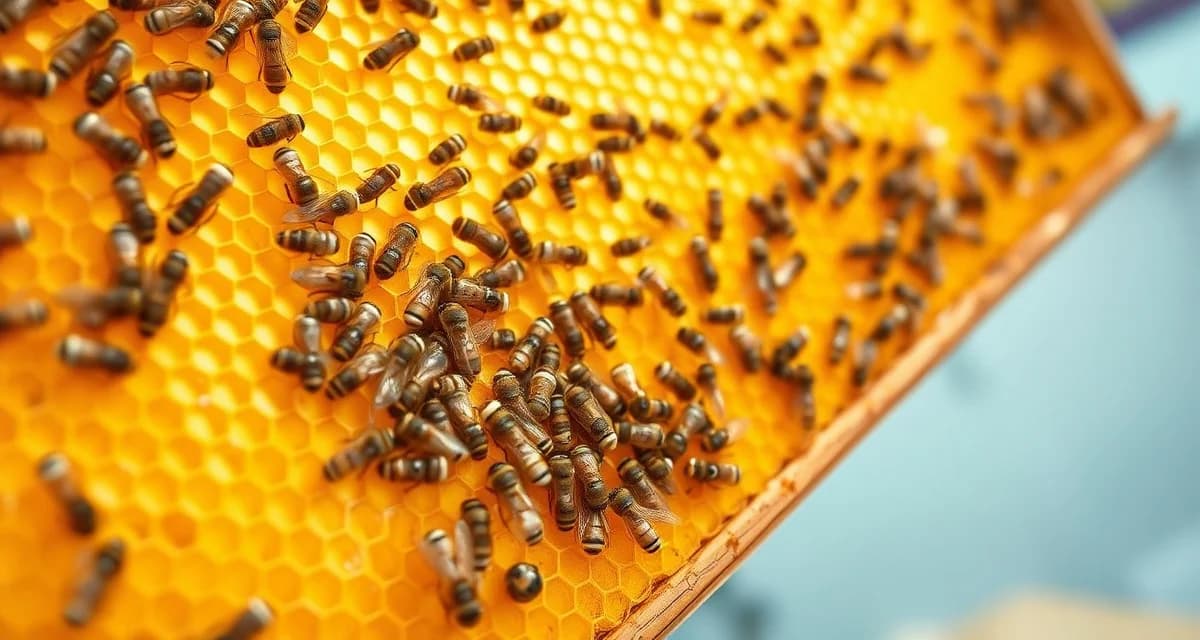
Hive Quality Score for Pollination Contract Compliance
Multi-factor quality scores are 60% more predictive of pollination success than single-metric frame counts. That's the difference between "there are bees on 6 frames" and "there are bees on 6 frames, the brood pattern is tight, the queen is laying well, and food stores are adequate." The first metric tells you there's population. The second tells you there's a population that will perform.
The PollenOps hive quality score combines four factors into a single number that predicts pollination performance and documents contract compliance. It's automatically compared to your contract minimum, and any non-compliant hive is flagged before you load it.
TL;DR
- Commercial beekeeping operations face two primary management challenges: operational logistics (hive health, transport, placement) and administrative coordination (contracts, payments, documentation).
- Most disputes and revenue losses in commercial beekeeping are preventable with better documentation and clearer contract terms.
- The operations that run most profitably are those with disciplined systems for tracking hive health, contract status, and fleet logistics in one place.
- PollenOps is built specifically for the operational complexity of commercial-scale pollination services, not adapted from a hobbyist tool.
- The most important management decisions (treatment timing, contract renewal, hive allocation) require accurate current data to make well.
What Goes Into a Hive Quality Score
The quality score is a composite of four assessments:
Factor 1: Bee Population (40% weight)
The primary metric. Count frames where both faces are covered with bees. A fully covered frame counts as 1. Partial coverage is estimated as a fraction.
Scoring range:
- 0-3 frames: 1-3 (very weak to weak)
- 4-5 frames: 4-6 (below minimum to borderline)
- 6-7 frames: 7-8 (contract-compliant to good)
- 8-10 frames: 9-10 (excellent to exceptional)
Population is weighted highest because a weak population can't be overcome by good brood or queen performance. However, population alone misses the difference between a 6-frame colony that's declining versus a 6-frame colony that's actively growing and will be 8 frames in two weeks.
Factor 2: Brood Pattern (30% weight)
A tight, consistent brood pattern indicates a healthy queen with good genetics and indicates the colony is building, not declining.
What to look for:
- Tight pattern (scores high): Capped cells cover 85%+ of the brood area without random empty cells
- Moderate pattern (scores mid): Some spotty areas but generally consistent
- Poor pattern (scores low): Significant spotty brood, sunken caps, multiple empty cells in the brood area
Spotty brood is one of the most important indicators of problems. It often indicates queen failure, disease (sacbrood, European foulbrood), or laying worker activity. A colony with beautiful population but poor brood is a risk at delivery.
Factor 3: Food Stores (20% weight)
A colony going into contract placement needs adequate food to sustain itself during transport stress and the first days at the placement site before foraging begins.
Minimum adequate: Two full frames of capped honey and at least one frame of pollen or pollen substitute.
Good: Three+ frames of capped honey, two frames of pollen, adequate investment for brood rearing.
Poor: Less than one frame of honey, no visible pollen. This colony will drain its reserves during transport and arrive hungry at the yard.
Food stores are lower-weighted than population and brood because they're the most correctable factor. A colony with low stores can be fed before a contract move; a colony with poor brood pattern or low population needs more time to correct.
Factor 4: Queen Status (10% weight)
Queen presence is binary for contract compliance purposes: you need evidence of a laying queen. However, the quality of queen assessment affects the brood pattern score, which carries more weight.
Confirmed queen present: Eggs visible in worker cells, fresh capped brood in normal pattern. Scores maximum for this factor.
Evidence of queen: Fresh brood present, eggs not directly observed. Acceptable.
No evidence of queen: No eggs, no young open brood, old capped brood only or no brood. Flags immediately for evaluation before the move.
How the Score Is Calculated in PollenOps
Enter your four factor assessments in the PollenOps inspection screen during a yard visit. The platform calculates the composite score instantly using the weighted formula:
Quality Score = (Population Score × 0.40) + (Brood Score × 0.30) + (Food Score × 0.20) + (Queen Score × 0.10)
The score is displayed on a 1-10 scale with one decimal place. The calculation is transparent: you can see each factor score and the weighted contribution.
The composite score is then compared to the contract minimum you've set for the linked contract. If the score falls below the threshold, the hive is flagged in red in your inspection dashboard. You see the non-compliant hives before you load your truck.
Sharing Scores with Growers
The pre-move quality assessment in PollenOps generates a grower-ready report from your assessment records. The report shows:
- Average quality score across all colonies assessed
- Number and percentage of colonies at or above threshold
- Distribution of scores across the delivery
- Any flagged colonies and disposition (replaced, combined, or excluded from delivery)
This report can be shared via the grower portal before delivery or exported as a PDF for email. Growers who receive pre-delivery quality documentation are more likely to view the delivery as a professional service rather than a commodity.
For the full workflow from pre-move strength assessment to contract compliance documentation, PollenOps connects each step in the inspection-to-delivery process.
Why Multi-Factor Beats Single-Metric
A single frame count can give a passing score to a colony that's actually at risk. A 6-frame colony with spotty brood and no food stores may look adequate on population alone but will perform poorly and may decline during the contract period.
The same 6-frame colony with tight brood, adequate food stores, and a confirmed laying queen is genuinely strong. It will maintain population through transport stress, build further at the placement site, and provide effective foraging coverage during bloom.
The 60% improvement in predictive accuracy from multi-factor scoring translates directly to fewer mid-season colony failures, fewer strength disputes at delivery, and better grower outcomes that drive renewals.
For your hive strength scoring system and how it connects to PollenOps compliance thresholds, see the dedicated strength scoring guide.
Frequently Asked Questions
What factors make up a hive quality score for pollination?
A PollenOps hive quality score combines four factors: bee population (40% weight, measured as frames of bees covered on both faces), brood pattern (30% weight, assessing tightness and health of the brood nest), food stores (20% weight, measuring available capped honey and pollen), and queen status (10% weight, confirming evidence of a laying queen). The weighted composite produces a 1-10 score. Multi-factor quality scores are 60% more predictive of pollination success than population alone because they capture the difference between a colony that looks populated and a colony that is genuinely healthy and actively building.
How does PollenOps calculate a hive quality score?
Enter your four factor assessments in the PollenOps inspection screen during a yard visit. The platform applies the weighted formula: population score (×0.40) + brood score (×0.30) + food score (×0.20) + queen status score (×0.10) to produce a composite 1-10 score. You can see each factor score and its weighted contribution, making the calculation transparent. The composite score is automatically compared to the minimum threshold you've set in the linked contract. Colonies below threshold are flagged in red in your inspection dashboard, letting you see non-compliant hives before loading day. Assessments are timestamped and GPS-tagged for documentation purposes.
Can I share my hive quality scores with a grower before contract signing?
Yes. PollenOps generates a grower-ready pre-delivery assessment report from your quality scores that you can share before delivery via the grower portal or as a PDF export. For pre-contract use, you can share quality data from similar colonies or from a previous season's records to demonstrate what your operation delivers. Growers who see documented quality data before signing often negotiate less aggressively on price because they're buying a documented commodity rather than an unknown one. After delivery, the same report documents your compliance for invoice purposes. Proactive documentation of quality is one of the simplest ways to support premium pricing.
What is the difference between commercial and hobby beekeeping?
Commercial beekeeping is distinguished by scale (typically 100+ hives, often 500-5,000+), revenue source (pollination contracts and bulk honey sales rather than local honey retail), and management approach (systematic protocols applied across yards rather than individual colony attention). Commercial operators manage bees as an agricultural enterprise, with the administrative, regulatory, and logistical complexity that entails. Most commercial operators derive the majority of their income from pollination services; honey production is a supplementary revenue stream.
How many hives are needed to make commercial beekeeping a full-time income?
Most beekeeping economists put the full-time commercial threshold at 500-800 hives, assuming efficient operations management and a combination of pollination and honey revenue. At 500 hives and $200/hive for almond pollination, almond season alone generates $100,000 in gross revenue before expenses. Net margins depend on operational efficiency, but well-run operations can achieve 30-50% net margins on pollination revenue. Additional crops and honey production improve per-hive economics but require additional management capacity.
What is the annual revenue potential for a 1,000-hive commercial operation?
A 1,000-hive operation running an almond season ($200/hive) plus blueberry or apple contracts ($80-100/hive) plus summer honey production ($25-40/hive after extraction costs) can generate $300,000-360,000 in annual gross revenue. Net margins after transport, crew, equipment, and hive replacement costs typically run 25-40% for well-managed operations, putting net income at $75,000-145,000 annually. The specific number depends heavily on circuit efficiency, loss rates, and contract quality.
Try These Free Tools
Sources
- USDA Agricultural Research Service
- Bee Informed Partnership
- American Beekeeping Federation (ABF)
- American Honey Producers Association
- Project Apis m.
Get Started with PollenOps
Managing a commercial beekeeping operation involves more data, more deadlines, and more moving parts than any general-purpose tool was designed to handle. PollenOps brings contracts, yard records, health documentation, and fleet logistics together in one platform built for the realities of commercial-scale beekeeping.