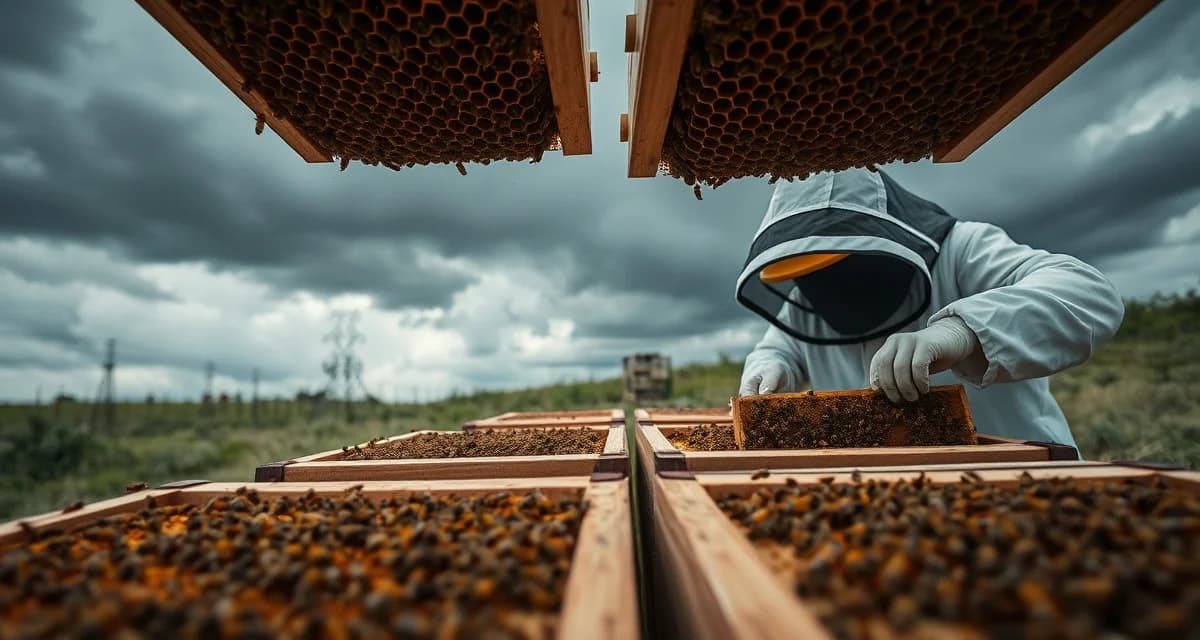
How to Manage Pollination Contracts During Bad Weather
Weather disruptions affect one in three almond seasons in California, costing beekeepers an average of $8,000 per disrupted contract in lost positioning efficiency, idle hive time, and disputed outcomes. The February almond bloom window is notoriously weather-volatile: cold fronts, multi-day rain events, and late frosts can compress or extend bloom and reduce effective pollination time to a fraction of what the contract assumes.
Managing your obligations during a weather disruption requires fast communication with growers, accurate documentation of what your hives actually experienced, and contract language that addresses weather events explicitly. Operators who handle weather disruptions professionally by keeping growers informed, adjusting schedules transparently, and documenting conditions thoroughly tend to retain contracts despite the disruption. Operators who go silent or dispute responsibility after the fact lose more than that season's revenue.
TL;DR
- Commercial beekeeping operations face two primary management challenges: operational logistics (hive health, transport, placement) and administrative coordination (contracts, payments, documentation).
- Most disputes and revenue losses in commercial beekeeping are preventable with better documentation and clearer contract terms.
- The operations that run most profitably are those with disciplined systems for tracking hive health, contract status, and fleet logistics in one place.
- PollenOps is built specifically for the operational complexity of commercial-scale pollination services, not adapted from a hobbyist tool.
- The most important management decisions (treatment timing, contract renewal, hive allocation) require accurate current data to make well.
What Weather Disruptions Mean for Your Hives
Cold and rain affect bee foraging activity directly. Honeybees don't fly in temperatures below 55 degrees Fahrenheit or in rain and sustained wind. A 3-day rain event during peak almond bloom means 3 days with minimal pollination activity regardless of how many hives you have at the site.
This biological reality is worth communicating to growers proactively. A grower who understands that bees don't work in rain is more likely to see a disrupted weather event as a shared challenge than a grower who finds out after the fact that the last week of bloom had minimal activity because of weather they didn't realize affected bee foraging.
Hive performance during cold spells also affects colony condition. Extended cold weather with no foraging can deplete stored reserves faster than typical. Check hive weight and food stores after a multi-day weather disruption and supplement if reserves look low. A colony that starves during a weather event during a pollination contracts is a documentation problem as well as a loss.
Adjusting Bloom Timing Alerts for Weather Events
PollenOps bloom timing alerts use real-time weather data from local weather stations to track growing degree day accumulation toward the bloom trigger. When a freeze occurs, degree day accumulation pauses; when temperatures recover, accumulation resumes. The bloom alert window adjusts with actual temperature data rather than firing on a calendar date that doesn't account for the cold event.
The practical result: if your alert was projected to fire on February 12 and a cold front hits February 10 and holds for 5 days, the alert timing updates based on the new temperature accumulation rather than firing while trees are still dormant. You see the revised estimated trigger in your dashboard so you can adjust your delivery planning before drivers and equipment are committed.
If a freeze damages bloom after your hives are already placed, that's a different situation. Hives are in place, the contract is active, and you're managing the post-freeze outcome. Document conditions thoroughly: photos of affected bloom, weather data from your local station, and inspection notes on colony behavior during the freeze event. This record is your evidence if the grower disputes pollination outcome.
Communicating with Growers During Disruptions
When a weather event is disrupting your planned delivery schedule, contact your grower before they contact you. A message that says "We're watching the cold front and expect delivery delay of 2 to 3 days based on current forecasts. I'll update you as the bloom window opens" is a professional response. Silence followed by a reactive explanation is not.
Growers understand weather. What they don't tolerate well is feeling uninformed about what is happening with their pollination contract. The beekeeper who calls first and updates regularly builds trust that survives a weather disruption. The beekeeper who waits and explains loses credibility even if their hives performed identically.
During an active placement with weather disruptions, a daily update schedule works well for high-value contracts. A brief text or email with current conditions and your assessment of the situation keeps the grower informed without requiring a lengthy conversation each day. PollenOps grower portal access gives your growers visibility into your delivery and inspection records during the season, which reduces the number of inbound status inquiries you handle manually.
For detailed communication practices across the full season, see the beekeeper-grower communication guide. For bloom timing alert calibration during volatile weather periods, see the bloom timing alerts documentation.
Contract Language for Weather Events
If your contracts don't address weather disruptions explicitly, you're negotiating the terms of a disruption after it has already happened, which is the worst possible negotiating position. Standard weather event language in a pollination contract covers:
Force majeure: Extreme weather events beyond either party's control (late frost, extended freeze, unusual precipitation) release both parties from performance obligations for the affected period without contract breach.
Pollination performance: The contract specifies what the beekeeper delivers (hives of specified strength, at specified time, at specified density) rather than a pollination outcome. Weather that prevents foraging is not a beekeeper failure.
Schedule adjustment: Language allowing delivery date adjustment of up to 3 to 5 days based on bloom timing alerts without triggering a breach protects you when weather delays the bloom window.
If your current contracts lack these provisions, the off-season is the time to revise them before the next weather disruption requires you to argue terms you'd have preferred to establish in writing months earlier.
Frequently Asked Questions
What do I do if a freeze occurs during my contracted pollination placement?
Document conditions immediately: photograph bloom damage, record weather station data for your yard location, and note colony behavior in your inspection log. Contact your grower the same day with your observations and your assessment of what the freeze means for the bloom window. If the freeze damage is severe enough to affect crop set regardless of bee activity, say so. It protects you from being held responsible for a pollination outcome that weather determined. Check your colony food stores after the freeze and supplement if needed. If your contract includes a force majeure clause, document that conditions qualify. If it doesn't, your best protection is thorough contemporaneous records of what actually occurred at the site.
How do I communicate with a grower when weather is disrupting bloom?
Contact your grower before they contact you, as soon as you know a significant weather event will affect your delivery schedule or placement timing. Explain what's happening, what you're doing about it, and when you'll update them next. During an active placement with disruptive weather, daily updates for high-value contracts are appropriate. Be specific: "The overnight low of 29 degrees will affect bee flight today; I'll assess colony condition this afternoon and update you by 5pm" is more useful than a general acknowledgment. Avoid speculating about crop outcome. Focus on what you control (hive condition, delivery logistics) and let the grower manage the crop assessment.
Can PollenOps adjust bloom timing alerts based on current weather forecasts?
Get Started with PollenOps
Managing a commercial beekeeping operation involves more data, more deadlines, and more moving parts than any general-purpose tool was designed to handle. PollenOps brings contracts, yard records, health documentation, and fleet logistics together in one platform built for the realities of commercial-scale beekeeping.
What is the difference between commercial and hobby beekeeping?
Commercial beekeeping is distinguished by scale (typically 100+ hives, often 500-5,000+), revenue source (pollination contracts and bulk honey sales rather than local honey retail), and management approach (systematic protocols applied across yards rather than individual colony attention). Commercial operators manage bees as an agricultural enterprise, with the administrative, regulatory, and logistical complexity that entails. Most commercial operators derive the majority of their income from pollination services; honey production is a supplementary revenue stream.
How many hives are needed to make commercial beekeeping a full-time income?
Most beekeeping economists put the full-time commercial threshold at 500-800 hives, assuming efficient operations management and a combination of pollination and honey revenue. At 500 hives and $200/hive for almond pollination, almond season alone generates $100,000 in gross revenue before expenses. Net margins depend on operational efficiency, but well-run operations can achieve 30-50% net margins on pollination revenue. Additional crops and honey production improve per-hive economics but require additional management capacity.
What is the annual revenue potential for a 1,000-hive commercial operation?
A 1,000-hive operation running an almond season ($200/hive) plus blueberry or apple contracts ($80-100/hive) plus summer honey production ($25-40/hive after extraction costs) can generate $300,000-360,000 in annual gross revenue. Net margins after transport, crew, equipment, and hive replacement costs typically run 25-40% for well-managed operations, putting net income at $75,000-145,000 annually. The specific number depends heavily on circuit efficiency, loss rates, and contract quality.
Try These Free Tools
Sources
- USDA Agricultural Research Service
- Bee Informed Partnership
- American Beekeeping Federation (ABF)
- American Honey Producers Association
- Project Apis m.