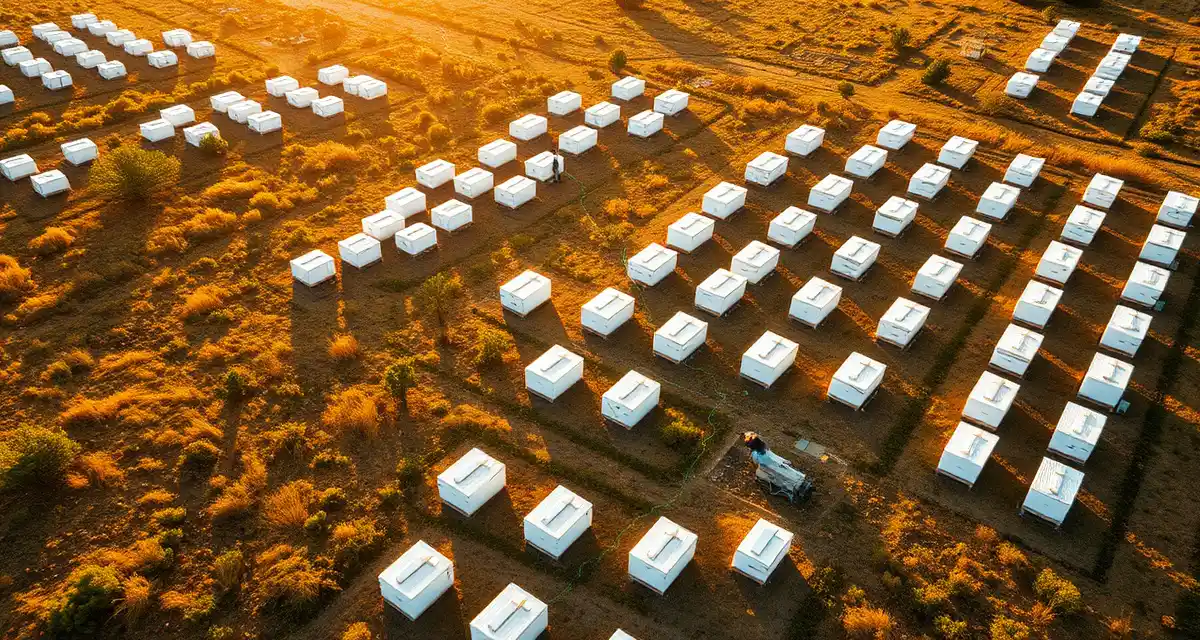
How to Track Multiple Pollination Yards
Beekeepers managing 10+ yards without software report averaging 2 scheduling errors per season. That's not surprising. Once you exceed 5 yards, the mental model that works perfectly for a single beekeeper with a handful of locations starts generating mistakes: wrong yard visited on the wrong day, hive count discrepancies that build up across yards, a contract that needs hives from a yard you thought was somewhere else.
GPS-based yard management solves this because the data lives in a system, not in your head.
TL;DR
- Commercial beekeeping operations face two primary management challenges: operational logistics (hive health, transport, placement) and administrative coordination (contracts, payments, documentation).
- Most disputes and revenue losses in commercial beekeeping are preventable with better documentation and clearer contract terms.
- The operations that run most profitably are those with disciplined systems for tracking hive health, contract status, and fleet logistics in one place.
- PollenOps is built specifically for the operational complexity of commercial-scale pollination services, not adapted from a hobbyist tool.
- The most important management decisions (treatment timing, contract renewal, hive allocation) require accurate current data to make well.
Why Manual Yard Tracking Breaks Down at Scale
For most beekeepers, the multi-yard tracking system that breaks down looks like this:
- A spreadsheet with yard names, locations (rough addresses or "Grandma's farm" type descriptions), and hive counts
- A mental map of which yards connect to which contracts
- A phone contacts list with grower and landowner numbers
- A paper notebook or text thread for yard-specific notes
This system works for 3-4 yards. At 8 yards, you're starting to mix up which yard has which contract, which one needs a visit, and which has the hive count you thought it had. At 15+ yards, you're averaging at least one meaningful error per season.
The errors are expensive. Sending a driver to the wrong yard wastes a full day's work. Delivering from a yard that doesn't have the right hive count creates a contract discrepancy. Forgetting which contract is associated with a specific yard means you're not sure when that yard's service period ends or what documentation applies.
What Is the Best Way to Organize GPS Data for Multiple Bee Yards?
GPS-based yard management works by pinning each yard to an actual map location, not just a name or address. The map is the organizing principle.
When you open PollenOps GPS yard tracking, you see a map with every yard pinned to its actual GPS location. Each pin shows the current hive count, the associated contract, and when the yard was last serviced. Zoom out and you see your entire operation's geographic distribution. Zoom in and you see yard-level details.
This map-first view makes several things immediately obvious that are hidden in a spreadsheet:
- Which yards are close together and could be serviced on the same truck run
- Which yards are outliers geographically, potentially requiring a dedicated trip
- Which yards have upcoming contract service periods that need attention
- Which yards haven't been updated recently, indicating a potential check-in gap
The GPS map loads in under 3 seconds on any device, even with 100 active yard pins. You're not waiting for a slow spreadsheet to load when you're making operational decisions in the field.
How Do I Avoid Losing Track of Hives Spread Across Many Different Locations?
The key is connecting every hive to a specific yard location in real time. Not just "we have 350 hives at Baker's Farm," but a live record that updates when hives are added to, removed from, or moved between yards.
PollenOps hive inventory maintains this live connection. When you move 80 hives from your winter yard to an almond site, the inventory updates. When a contract ends and hives return to your home yard, the inventory updates. You're never reconciling hive count data after the fact because the count is always current.
For multi-state operations, this live geographic tracking is even more important. When you have 200 hives in California, 300 in Washington, and 150 in North Dakota simultaneously, knowing exactly where each group is at any moment requires a system, not memory.
How Do I Assign Different Contracts to Different Yards in PollenOps?
Each yard in PollenOps has a contract field that links the yard record to the specific grower contract it's servicing. The link is bidirectional: the yard shows which contract it's under, and the contract shows which yard is fulfilling it.
When you're building your contract calendar at the start of the season, you assign each contracted location to a specific yard. The yard then carries the contract's service period dates, hive count requirement, and strength specification in its record.
During the service period, every field check-in at that yard is automatically recorded as contract-relevant documentation. Your GPS delivery timestamp, hive count, and strength scores flow from the yard record into the contract record without manual re-entry.
At the end of the service period, the contract is marked as complete and the yard returns to "available" status in your inventory. The hive count at that location is now available for reassignment to the next contract.
Managing the 5-to-50 Yard Transition
The 5-to-50 yard transition is where most commercial operations hit their first serious organizational breaking point. At 5 yards, everything works. At 15 yards, there are cracks. At 30+ yards, a system failure is nearly inevitable without dedicated software.
The transition happens most smoothly when you start building your digital yard records before you need them, not after you've already experienced the failure.
Practical steps for the transition:
- Import all existing yard locations as GPS pins in PollenOps
- Enter current hive counts for each yard
- Link each contracted yard to its associated contract
- Set up your first bloom timing alerts for each yard's target crop
- Start logging all check-ins through the mobile app
Within one season, your yard records are populated with GPS-timestamped visit history, hive count changes, and contract associations that make every yard decision data-driven rather than memory-based.
Frequently Asked Questions
How do I avoid losing track of hives spread across many different locations?
Connect every hive to a specific yard location in a live inventory system that updates automatically when hives move. PollenOps hive inventory maintains real-time counts at every yard location, updating when hives are moved in or out through GPS field check-ins. You're never reconciling hive count data after the fact because the count reflects the most recent check-in at each location.
What is the best way to organize GPS data for multiple bee yards?
Use a map-first view where every yard is pinned to its actual GPS coordinates and the map shows current hive counts, contract associations, and last service dates for all yards simultaneously. A map view makes geographic patterns, route optimization opportunities, and service gaps immediately visible in ways that a spreadsheet list cannot. PollenOps GPS yard map loads in under 3 seconds with 100+ active yard pins and works offline in areas without cell coverage.
How do I assign different contracts to different yards in PollenOps?
Each yard record in PollenOps has a contract field that links the yard to its current contract. The link is bidirectional: the yard shows which contract it's servicing, and the contract shows which yard is fulfilling it. Field check-ins at the contracted yard flow automatically into the contract's compliance record. At the end of the service period, the contract closes and the yard returns to available status in your hive inventory.
What is the difference between commercial and hobby beekeeping?
Commercial beekeeping is distinguished by scale (typically 100+ hives, often 500-5,000+), revenue source (pollination contracts and bulk honey sales rather than local honey retail), and management approach (systematic protocols applied across yards rather than individual colony attention). Commercial operators manage bees as an agricultural enterprise, with the administrative, regulatory, and logistical complexity that entails. Most commercial operators derive the majority of their income from pollination services; honey production is a supplementary revenue stream.
How many hives are needed to make commercial beekeeping a full-time income?
Most beekeeping economists put the full-time commercial threshold at 500-800 hives, assuming efficient operations management and a combination of pollination and honey revenue. At 500 hives and $200/hive for almond pollination, almond season alone generates $100,000 in gross revenue before expenses. Net margins depend on operational efficiency, but well-run operations can achieve 30-50% net margins on pollination revenue. Additional crops and honey production improve per-hive economics but require additional management capacity.
What is the annual revenue potential for a 1,000-hive commercial operation?
A 1,000-hive operation running an almond season ($200/hive) plus blueberry or apple contracts ($80-100/hive) plus summer honey production ($25-40/hive after extraction costs) can generate $300,000-360,000 in annual gross revenue. Net margins after transport, crew, equipment, and hive replacement costs typically run 25-40% for well-managed operations, putting net income at $75,000-145,000 annually. The specific number depends heavily on circuit efficiency, loss rates, and contract quality.
Try These Free Tools
Sources
- USDA Agricultural Research Service
- Bee Informed Partnership
- American Beekeeping Federation (ABF)
- American Honey Producers Association
- Project Apis m.
Get Started with PollenOps
Managing a commercial beekeeping operation involves more data, more deadlines, and more moving parts than any general-purpose tool was designed to handle. PollenOps brings contracts, yard records, health documentation, and fleet logistics together in one platform built for the realities of commercial-scale beekeeping.