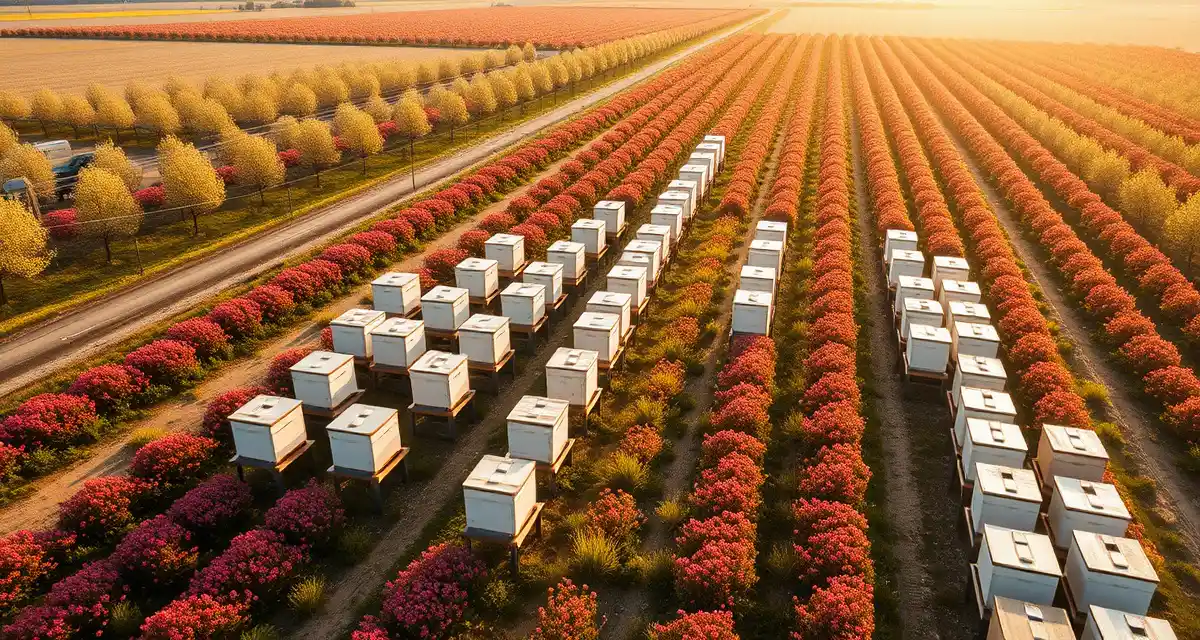
Pollination Service Management Software in Idaho
Idaho is the top red clover seed state in the US and a significant commercial pollination market. The state's pollination calendar covers both seed crops and tree fruit, spanning from April cherry bloom in the Snake River Valley to July red clover seed pollination in the Magic Valley.
Idaho's combination of seed crop and tree fruit pollination in a single geographic corridor is what makes it commercially exceptional. An operation moving through California almonds in February can arrive in Idaho in April for cherry, work through apple, and then pivot to red clover seed contracts in June without leaving the state.
TL;DR
- Commercial beekeeping operations face two primary management challenges: operational logistics (hive health, transport, placement) and administrative coordination (contracts, payments, documentation).
- Most disputes and revenue losses in commercial beekeeping are preventable with better documentation and clearer contract terms.
- The operations that run most profitably are those with disciplined systems for tracking hive health, contract status, and fleet logistics in one place.
- PollenOps is built specifically for the operational complexity of commercial-scale pollination services, not adapted from a hobbyist tool.
- The most important management decisions (treatment timing, contract renewal, hive allocation) require accurate current data to make well.
The Idaho Pollination Calendar
April-May: Apple and cherry orchards in the Treasure Valley (Payette, Canyon, Gem counties). This corridor adjacent to Nampa and Caldwell is Idaho's primary tree fruit district.
May-June: Apple orchards extend through May; pear bloom in the same corridor.
June-July: Red clover seed production in the Magic Valley (Twin Falls, Minidoka, Cassia counties). This is Idaho's peak seed crop pollination window.
June-August: White clover seed in southern Idaho; alfalfa seed in the Magic and Snake River valleys.
Idaho's bloom calendar covers apple, cherry, red clover, white clover, and alfalfa from April through July, making it one of the most productive pollination windows in the Mountain West.
Red Clover Seed Pollination
Idaho's Magic Valley is the center of US red clover seed production. The crop is planted in the Twin Falls, Minidoka, and Cassia county corridor and blooms from late June through mid-July.
Red clover seed growers are highly dependent on bee pollination. Unlike forage clover, seed clover must be cross-pollinated to produce viable seed. Honeybee placement is typically 2-3 hives per acre, with some intensive seed operations going higher.
Per-hive rates for Idaho clover seed typically run $50-80/hive, lower than tree fruit contracts but for longer placement periods (3-4 weeks vs 1-2 weeks for tree fruit). The longer placement time and strong colony demand make it a meaningful addition to an Idaho circuit.
For clover seed pollination management resources and contract templates, PollenOps provides a clover seed-specific contract type with appropriate terms.
Tree Fruit in the Treasure Valley
Idaho's Treasure Valley, adjacent to the Oregon border near Nampa and Caldwell, supports a significant apple and cherry industry. Canyon County is the heart of this production area.
Cherry bloom: Late April, typically April 20-May 5 depending on year. Very compressed window (7-14 days). Cherry is one of the most time-sensitive pollination contracts in agriculture.
Apple bloom: May, running from early to late May at different altitudes and varieties. More forgiving timing window than cherry.
Cherry contracts in Idaho pay $90-130/hive, similar to Pacific Northwest cherry market rates. Apple runs $80-110/hive.
The Treasure Valley is geographically close to Oregon's Willamette Valley, where additional seed crop contracts are available after Idaho apple season.
Alfalfa Seed Pollination
Southern Idaho is a major alfalfa seed production state. While alfalfa leaf-cutter bees are the preferred pollinator for alfalfa seed, honeybees provide supplemental pollination that some growers use.
Alfalfa seed contracts for honeybees in Idaho are typically negotiated at lower rates ($40-60/hive) and are secondary to the leaf-cutter primary market. Operations with Idaho circuits may encounter alfalfa seed opportunities that fit between their primary clover and tree fruit contracts.
Interstate Movement Requirements
Moving hives into Idaho requires:
- Certificate of health from your home state apiarist
- Idaho Department of Agriculture permit for interstate movement (required and must be obtained before entry)
- Idaho apiary registration
Idaho has been particularly active on agricultural biosecurity. Requirements can be strict regarding inspection documentation from states with known disease issues. Contact the Idaho State Department of Agriculture's Plant Industries Division well in advance of your first planned movement.
For pollination contract management software that handles Idaho's combination of seed crop and tree fruit contracts in one platform, PollenOps supports all crop types with regionally calibrated bloom alerts.
Building an Idaho Circuit
A full Idaho circuit for a 500-1,000 hive operation looks like this:
- Late April-May: Treasure Valley cherry and apple
- June: Move to Magic Valley for red clover seed first placements
- June-July: Red clover seed peak
- July-August: White clover and alfalfa supplemental placements
Total in-state contract time: 3-4 months. An operation that plans this circuit well keeps colonies in active contracts from April through August without leaving the state.
Frequently Asked Questions
When does red clover seed pollination start in southern Idaho?
Red clover seed pollination in southern Idaho's Magic Valley typically begins in late June, with peak bloom and peak pollination need running from early July through mid-July. The exact start date depends on the year's temperature accumulation and the maturity of the specific fields. Some early-planted fields start blooming in the last week of June; most peak in the first two weeks of July. Growers in the Twin Falls, Minidoka, and Cassia county corridor typically contact their beekeepers in May to confirm delivery dates. PollenOps bloom alerts for Idaho red clover fire based on growing degree day models calibrated to the Magic Valley region.
How do I manage contracts for both fruit tree and seed crop growers in Idaho?
Idaho's fruit tree and seed crop seasons run sequentially, which makes them well-suited to a single-operation circuit. Tree fruit (cherry, apple) runs April-May in the Treasure Valley near Nampa; red clover seed runs June-July in the Magic Valley near Twin Falls. In PollenOps, set up separate contracts for each grower type with bloom alerts for each region. The tree fruit alerts fire first; after your apple season wraps in late May, the clover seed alerts start as Magic Valley temperatures warm. The platform shows both contract sets on the same timeline calendar so you can plan your hive movement between the Treasure Valley and Magic Valley during the gap between contracts.
What are Idaho's interstate hive movement requirements?
Idaho requires an interstate movement permit from the Idaho State Department of Agriculture before colonies cross the state border. You must also carry a current certificate of health issued by your home state's licensed apiarist. Idaho requires apiary registration for operations placing hives in the state. The state has been active on biosecurity requirements; some originating states require additional documentation based on disease history. Contact Idaho ISDA's Plant Industries Division at least 4-6 weeks before your planned entry date to confirm current requirements and allow time for permit processing. Operations from California, Oregon, and Washington have established procedures with Idaho.
What is the difference between commercial and hobby beekeeping?
Commercial beekeeping is distinguished by scale (typically 100+ hives, often 500-5,000+), revenue source (pollination contracts and bulk honey sales rather than local honey retail), and management approach (systematic protocols applied across yards rather than individual colony attention). Commercial operators manage bees as an agricultural enterprise, with the administrative, regulatory, and logistical complexity that entails. Most commercial operators derive the majority of their income from pollination services; honey production is a supplementary revenue stream.
How many hives are needed to make commercial beekeeping a full-time income?
Most beekeeping economists put the full-time commercial threshold at 500-800 hives, assuming efficient operations management and a combination of pollination and honey revenue. At 500 hives and $200/hive for almond pollination, almond season alone generates $100,000 in gross revenue before expenses. Net margins depend on operational efficiency, but well-run operations can achieve 30-50% net margins on pollination revenue. Additional crops and honey production improve per-hive economics but require additional management capacity.
What is the annual revenue potential for a 1,000-hive commercial operation?
A 1,000-hive operation running an almond season ($200/hive) plus blueberry or apple contracts ($80-100/hive) plus summer honey production ($25-40/hive after extraction costs) can generate $300,000-360,000 in annual gross revenue. Net margins after transport, crew, equipment, and hive replacement costs typically run 25-40% for well-managed operations, putting net income at $75,000-145,000 annually. The specific number depends heavily on circuit efficiency, loss rates, and contract quality.
Try These Free Tools
Sources
- USDA Agricultural Research Service
- Bee Informed Partnership
- American Beekeeping Federation (ABF)
- American Honey Producers Association
- Project Apis m.
Get Started with PollenOps
Managing a commercial beekeeping operation involves more data, more deadlines, and more moving parts than any general-purpose tool was designed to handle. PollenOps brings contracts, yard records, health documentation, and fleet logistics together in one platform built for the realities of commercial-scale beekeeping.