Pollination Service Management Software in Maine
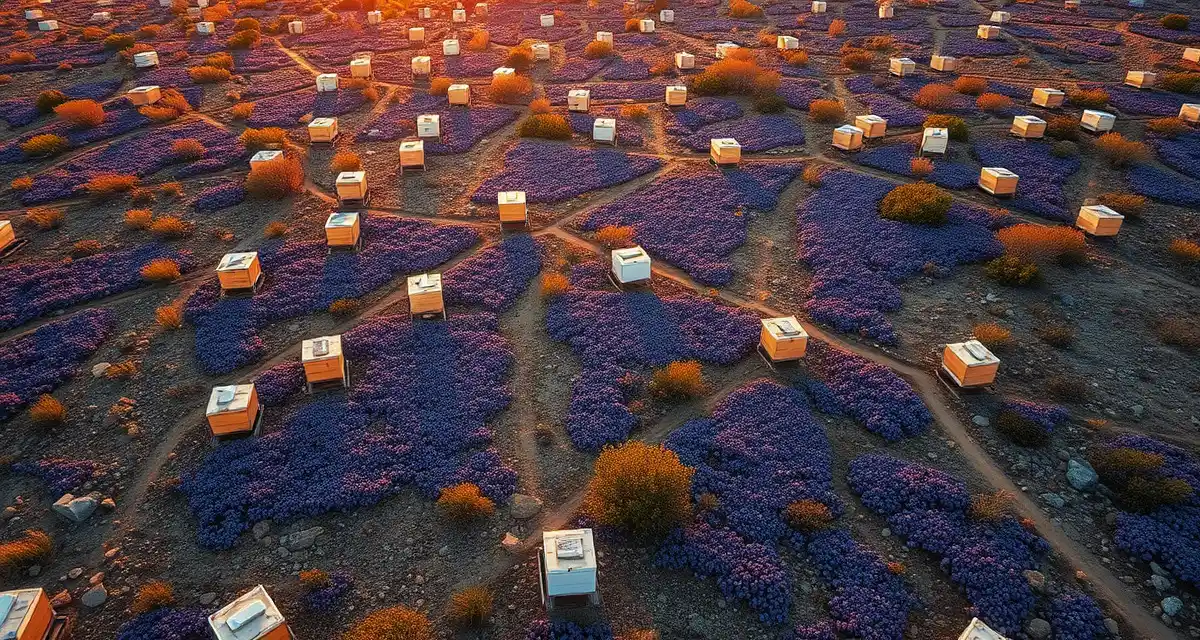
Maine produces over 90% of the US wild blueberry crop, all dependent on commercial pollination. This is one of the most unique pollination markets you'll encounter: remote terrain, patchy bloom across rocky barrens, a very specific logistical profile, and a grower base that manages land very differently from conventional orchard agriculture.
Wild blueberry pollination is not like highbush blueberry pollination. Understanding the differences is essential before you sign your first Maine contract.
TL;DR
- Commercial beekeeping operations face two primary management challenges: operational logistics (hive health, transport, placement) and administrative coordination (contracts, payments, documentation).
- Most disputes and revenue losses in commercial beekeeping are preventable with better documentation and clearer contract terms.
- The operations that run most profitably are those with disciplined systems for tracking hive health, contract status, and fleet logistics in one place.
- PollenOps is built specifically for the operational complexity of commercial-scale pollination services, not adapted from a hobbyist tool.
- The most important management decisions (treatment timing, contract renewal, hive allocation) require accurate current data to make well.
Wild Blueberry vs Highbush Blueberry: The Key Differences
Wild (lowbush) blueberries grow naturally across Maine's rocky barrens and managed blueberry lands. They're not planted in rows like highbush varieties; they spread vegetatively across the landscape. Fields are managed through burning or mowing on a two-year cycle: half the field produces fruit each year while the other half regenerates.
This creates a patchy bloom pattern that's fundamentally different from a uniform highbush orchard. Bloom timing varies across a single field based on elevation, soil moisture, exposure, and microclimate. A field that's "in bloom" may have some sections at full bloom while adjacent sections are still at bud stage.
Implications for beekeepers:
- You can't assign a single delivery date to a field; bloom progresses across the landscape over 1-2 weeks
- hive placement within the field matters more than in a uniform orchard
- The patchy bloom means your bees are always moving to find open flowers, which is actually beneficial for cross-pollination
When Does Wild Blueberry Bloom in Maine?
Wild blueberry bloom timing in Maine depends strongly on the specific location:
- Southern and coastal Maine: Late May to mid-June in typical years
- Inland Maine (Washington County, Hancock County): Mid-June is typical for the main bloom, with some variation by year
- Far northern Maine (Aroostook County): Late June, occasionally into July
Washington County is the heart of Maine's wild blueberry industry. Bloom there typically runs from mid-to-late June in normal years. Cold springs can push bloom into July; warm springs bring it earlier.
PollenOps wild blueberry bloom alerts account for the patchy bloom variation across Maine's terrain. The alerts fire based on regional bloom conditions, not a fixed date, so your timing is driven by actual field conditions rather than a historical average.
How Many Hives Per Acre for Wild Blueberry Pollination in Maine?
The standard for Maine wild blueberry is 2-3 hives per acre, though field-level requirements vary based on:
- Natural pollinator population: Maine's wild blueberry barrens support native bee populations, including bumble bees and wild solitary bees. Fields near intact natural habitat may need fewer commercial hives.
- Bloom density: Newly burned or recently mowed fields have lower stem counts and therefore fewer flowers per acre. The first production year after regrowth is lighter than a mature production year.
- Grower's historical yield data: Fields with chronic low yield from pollination shortfalls may need higher density.
Because wild blueberry acreage is managed as barrens rather than planted rows, exact planted acreage calculations are rougher than in highbush production. Your contract should define the acreage basis clearly.
Logistics of Wild Blueberry Hive Access in Maine
Maine's wild blueberry barrens are often remote, rocky, and not designed for easy equipment access. Unlike an apple orchard with a maintained headland road, many blueberry fields in Washington County require navigating dirt roads, crossing rocky terrain, and positioning hives in areas accessible only by ATV or short truck runs from a parking area.
Before you accept a Maine wild blueberry contract, scout the site access:
- Can your truck reach the field perimeter?
- Are there gates or private road easements you need permission to use?
- Is there a designated hive placement zone the grower expects?
- What is the road condition in late May/early June (spring mud can persist in northern Maine)?
Some beekeepers work with growers who are set up for hive access, with maintained field roads and marked placement zones. Others find themselves working with landowners who haven't thought carefully about beekeeper logistics. Know what you're committing to before signing.
What Are Maine's Requirements for Bringing Hives in From Out of State?
Maine requires a certificate of health for all colonies entering from another state, issued within 30 days of entry. Maine also requires:
- Home state apiary registration documentation
- Maine apiary registration for hives placed in the state (contact Maine Department of Agriculture for registration process)
- Compliance with any current disease or pest quarantine orders (check before entering)
Maine has historically been careful about disease and pest introduction because the wild blueberry industry's native pollinator population is considered ecologically valuable and potentially vulnerable to introduced pests.
Frequently Asked Questions
When does wild blueberry bloom in Maine?
In Washington County, the heart of Maine's production, wild blueberry bloom typically starts in mid-to-late June in normal years. Southern and coastal Maine sees earlier bloom, starting in late May to mid-June. Far northern areas may bloom into July. Bloom timing is more variable in wild blueberries than in cultivated varieties due to the patchy landscape and microclimate variation across barrens terrain. PollenOps wild blueberry alerts are calibrated to regional conditions rather than a fixed date.
How many hives per acre are needed for wild blueberry pollination in Maine?
The typical range is 2-3 hives per acre. Fields near intact native pollinator habitat may need fewer commercial hives because native bumble bees and solitary bees provide effective supplemental service. Fields with history of low yield from pollination shortfalls may need 3+ hives per acre. Because wild blueberry acreage is irregular, confirm the acreage basis for the contract with your grower before setting the hive count.
What are Maine's requirements for bringing hives in from out of state?
Maine requires a health certificate issued within 30 days by a licensed apiary inspector in your home state, your home state apiary registration documentation, and Maine apiary registration for hives placed in the state. Check the USDA APHIS pest alert system and Maine Department of Agriculture for any current disease or pest restriction orders before moving hives into the state.
What is the difference between commercial and hobby beekeeping?
Commercial beekeeping is distinguished by scale (typically 100+ hives, often 500-5,000+), revenue source (pollination contracts and bulk honey sales rather than local honey retail), and management approach (systematic protocols applied across yards rather than individual colony attention). Commercial operators manage bees as an agricultural enterprise, with the administrative, regulatory, and logistical complexity that entails. Most commercial operators derive the majority of their income from pollination services; honey production is a supplementary revenue stream.
How many hives are needed to make commercial beekeeping a full-time income?
Most beekeeping economists put the full-time commercial threshold at 500-800 hives, assuming efficient operations management and a combination of pollination and honey revenue. At 500 hives and $200/hive for almond pollination, almond season alone generates $100,000 in gross revenue before expenses. Net margins depend on operational efficiency, but well-run operations can achieve 30-50% net margins on pollination revenue. Additional crops and honey production improve per-hive economics but require additional management capacity.
What is the annual revenue potential for a 1,000-hive commercial operation?
A 1,000-hive operation running an almond season ($200/hive) plus blueberry or apple contracts ($80-100/hive) plus summer honey production ($25-40/hive after extraction costs) can generate $300,000-360,000 in annual gross revenue. Net margins after transport, crew, equipment, and hive replacement costs typically run 25-40% for well-managed operations, putting net income at $75,000-145,000 annually. The specific number depends heavily on circuit efficiency, loss rates, and contract quality.
Try These Free Tools
Sources
- USDA Agricultural Research Service
- Bee Informed Partnership
- American Beekeeping Federation (ABF)
- American Honey Producers Association
- Project Apis m.
Get Started with PollenOps
Managing a commercial beekeeping operation involves more data, more deadlines, and more moving parts than any general-purpose tool was designed to handle. PollenOps brings contracts, yard records, health documentation, and fleet logistics together in one platform built for the realities of commercial-scale beekeeping.