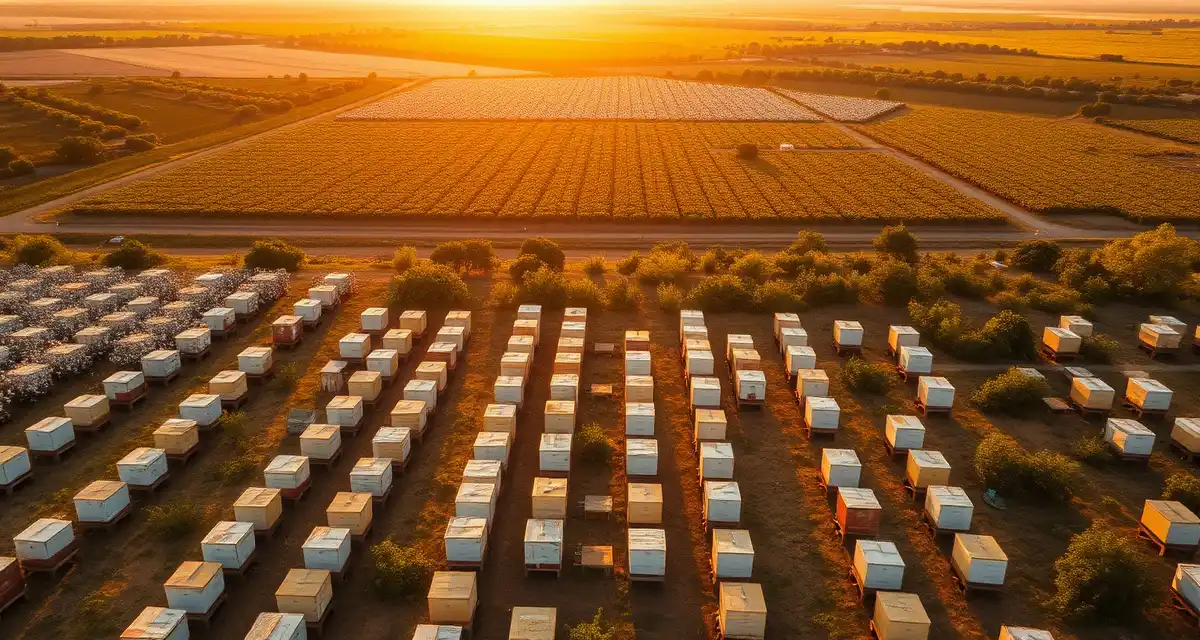
Pollination Service Management Software in Texas
Texas is one of the few states where commercial beekeepers can access pollination contracts in every month of the year. The state's geographic diversity runs from the Rio Grande Valley citrus belt in the south to the East Texas Piney Woods blueberry country to the High Plains cotton region, spanning 4 distinct growing seasons in a single state.
Managing a Texas operation means managing multiple crop types, multiple climate zones, and a year-round calendar that doesn't shut down in winter the way operations in northern states do.
TL;DR
- Commercial beekeeping operations face two primary management challenges: operational logistics (hive health, transport, placement) and administrative coordination (contracts, payments, documentation).
- Most disputes and revenue losses in commercial beekeeping are preventable with better documentation and clearer contract terms.
- The operations that run most profitably are those with disciplined systems for tracking hive health, contract status, and fleet logistics in one place.
- PollenOps is built specifically for the operational complexity of commercial-scale pollination services, not adapted from a hobbyist tool.
- The most important management decisions (treatment timing, contract renewal, hive allocation) require accurate current data to make well.
The Texas Pollination Calendar
Winter (December-March):
- Rio Grande Valley citrus: December through February
- South Texas vegetable crops: December through March
- Winter melon and specialty crops in the Valley
Spring (March-June):
- East Texas blueberries: March through April (Nacogdoches, Smith, and Cherokee counties)
- Texas Hill Country peach orchards: March through April
- Watermelon across Central Texas: April through June
- Cotton in West Texas: May through July
Summer (June-September):
- Sunflowers in the Panhandle: June through August
- Cucurbit crops statewide: June through August
- Sorghum and field crops in Central Texas
Fall (September-November):
- Late cucurbit crops
- Cover crop plantings supporting honey production
- Colony build-up for winter movement
Texas's bloom calendar covers citrus, blueberries, watermelon, and cotton across these four seasons, making it one of the most year-round pollination states in the US.
East Texas Blueberries
East Texas supports a growing commercial blueberry industry concentrated in Smith, Nacogdoches, and Cherokee counties. The crop is predominantly southern highbush and rabbiteye varieties, with bloom timing running from mid-March to mid-April depending on variety and spring temperatures.
Texas blueberry contracts typically pay $75-110 per hive, in line with southeastern blueberry rates. The crop is expanding as more growers plant commercial acreage, and commercial pollinator demand is growing with it.
East Texas blueberry growers are accessible from Louisiana and Arkansas for operators running southern circuits, and the timing slots cleanly between Florida/Georgia blueberry (February-March) and Michigan (June) on a migratory circuit.
For bloom timing alerts calibrated to East Texas blueberry varieties, PollenOps fires crop-specific alerts based on spring temperature accumulation in the East Texas growing region.
Rio Grande Valley Citrus
The lower Rio Grande Valley in Hidalgo and Cameron counties supports significant citrus production including navel oranges, grapefruit, and specialty citrus. Citrus bloom in the Valley typically runs December through February.
While citrus is partially self-fertile, bee placement during bloom increases fruit set and uniformity. Citrus pollination contracts in Texas pay in the $70-100/hive range, with premium rates for strong colonies on high-value specialty citrus.
The Valley's proximity to the Mexican border means that operations working this region need to be aware of Mexican import/export regulations if they ever move equipment or colonies across the border.
Watermelon and Cucurbit Crops
Watermelon is one of Texas's major commercial crops, with production concentrated in the Hill Country, Panhandle, and East Texas regions. Commercial watermelon production is entirely dependent on bee pollination for fruit set.
Texas watermelon contracts typically run April through June depending on region. Placement is 1-2 hives per acre, with most commercial operations targeting the higher end for maximum fruit set.
Summer cucurbit crops (cantaloupe, squash, cucumber) add additional placement opportunities through August. The total cucurbit pollination market in Texas is significant and under-served by professional beekeeping operations compared to California.
Interstate Movement Requirements
Moving hives into Texas requires:
- Certificate of health from your home state's apiarist
- Texas A&M AgriLife Extension apiary registration (free, annual)
- Compliance with Texas's africanized honeybee management requirements
Texas has established AHB populations in the southern part of the state. Operations placing hives in South Texas and the Rio Grande Valley need to monitor colony genetics over time.
Building a Texas Annual Circuit
For an operator looking to build a year-round Texas circuit, the sequencing looks like this:
- December-February: Rio Grande Valley citrus
- March-April: East Texas blueberries and Hill Country peach
- April-June: Central Texas watermelon
- June-August: Panhandle sunflowers and cucurbit crops
A well-managed circuit of this type can keep 500-1,000 hives in active contracts for 8-9 months of the year, which is unusual outside of California. Texas operations don't need to depend on almonds if they build their calendar around the state's own crop diversity.
For pollination contract management software that handles multi-region, multi-crop Texas operations, PollenOps supports simultaneous contracts across all Texas regions with crop-specific bloom timing built in.
Frequently Asked Questions
When does blueberry bloom in East Texas?
East Texas blueberry bloom typically runs from mid-March through mid-April, though the exact timing varies by variety and the year's spring temperature accumulation. Southern highbush varieties tend to bloom first, in mid-to-late March; rabbiteye varieties follow in late March through April. The timing is roughly 3-4 weeks later than Georgia blueberry bloom and 6-8 weeks before Michigan. East Texas blueberry growers are primarily in Smith, Nacogdoches, and Cherokee counties. PollenOps bloom alerts for East Texas blueberries fire based on heat unit models calibrated to the Piney Woods growing region.
How do I manage both early and late season pollination contracts in Texas?
Texas's year-round growing calendar means managing contracts across multiple crop types and regions simultaneously. The most effective approach is building your Texas season as a sequential circuit: start with Rio Grande Valley citrus in December-February, move to East Texas blueberries in March-April, then watermelon in April-June, then Panhandle cucurbits in June-August. PollenOps contract management lets you set up all of these contracts with region-specific bloom alerts, so each delivery window is on your calendar months in advance. You can view all Texas contracts in a single timeline view to see where gaps exist and where your hive capacity is committed.
What permits are required for moving hives into Texas from Louisiana or Oklahoma?
Moving hives into Texas from neighboring states requires a current certificate of health issued by your home state's apiarist, and you must register with Texas A&M AgriLife Extension's apiary program (free annual registration). There is no entry inspection required at the border, but your health certificate must be current (typically issued within 30 days of movement). Texas has africanized honeybee populations in the southern part of the state; while there are no restrictions on bringing European colonies in, operations working in AHB territory should monitor colony genetics over time.
What is the difference between commercial and hobby beekeeping?
Commercial beekeeping is distinguished by scale (typically 100+ hives, often 500-5,000+), revenue source (pollination contracts and bulk honey sales rather than local honey retail), and management approach (systematic protocols applied across yards rather than individual colony attention). Commercial operators manage bees as an agricultural enterprise, with the administrative, regulatory, and logistical complexity that entails. Most commercial operators derive the majority of their income from pollination services; honey production is a supplementary revenue stream.
How many hives are needed to make commercial beekeeping a full-time income?
Most beekeeping economists put the full-time commercial threshold at 500-800 hives, assuming efficient operations management and a combination of pollination and honey revenue. At 500 hives and $200/hive for almond pollination, almond season alone generates $100,000 in gross revenue before expenses. Net margins depend on operational efficiency, but well-run operations can achieve 30-50% net margins on pollination revenue. Additional crops and honey production improve per-hive economics but require additional management capacity.
What is the annual revenue potential for a 1,000-hive commercial operation?
A 1,000-hive operation running an almond season ($200/hive) plus blueberry or apple contracts ($80-100/hive) plus summer honey production ($25-40/hive after extraction costs) can generate $300,000-360,000 in annual gross revenue. Net margins after transport, crew, equipment, and hive replacement costs typically run 25-40% for well-managed operations, putting net income at $75,000-145,000 annually. The specific number depends heavily on circuit efficiency, loss rates, and contract quality.
Try These Free Tools
Sources
- USDA Agricultural Research Service
- Bee Informed Partnership
- American Beekeeping Federation (ABF)
- American Honey Producers Association
- Project Apis m.
Get Started with PollenOps
Managing a commercial beekeeping operation involves more data, more deadlines, and more moving parts than any general-purpose tool was designed to handle. PollenOps brings contracts, yard records, health documentation, and fleet logistics together in one platform built for the realities of commercial-scale beekeeping.