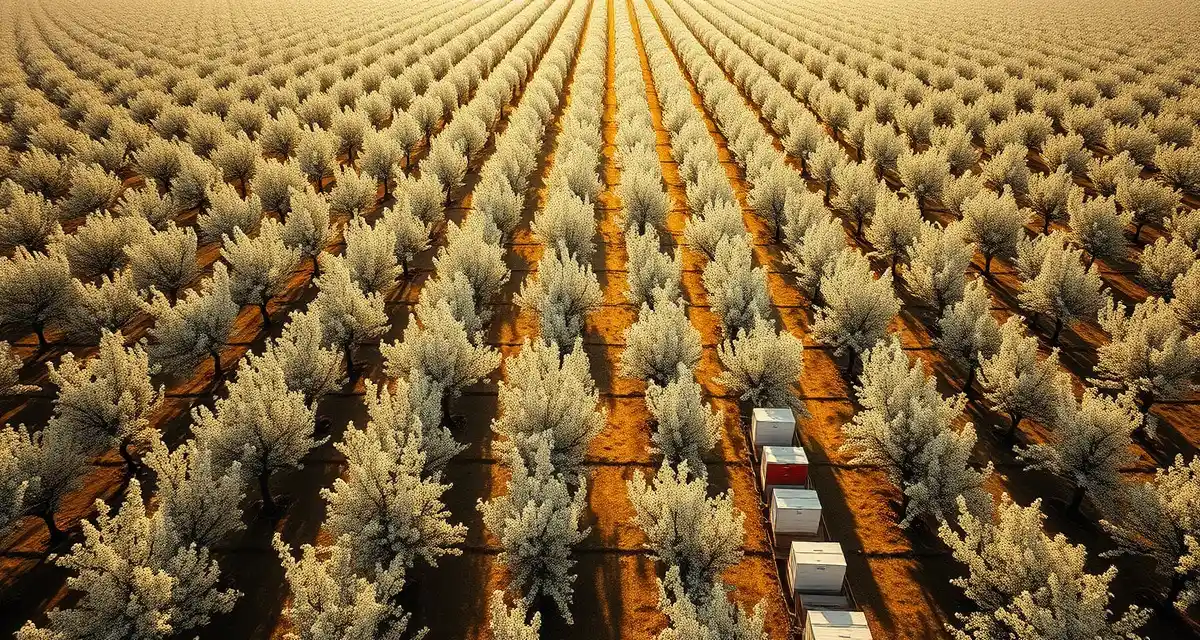
Pollination Service Management Software for the Pacific Coast
The Pacific Coast states produce over $2 billion in crops that depend on commercial pollination services annually. From California's February almond bloom to Oregon's July blueberry season, the Pacific Coast bloom sequence spans nearly six months and covers some of the most valuable pollination contracts in US agriculture.
An operation that builds a full Pacific Coast circuit can stay in active contracts from February through July without leaving the West Coast. The geography runs 1,200 miles, but the bloom sequence runs in a clear north-to-south-to-north pattern that experienced operators navigate with precision.
TL;DR
- Commercial beekeeping operations face two primary management challenges: operational logistics (hive health, transport, placement) and administrative coordination (contracts, payments, documentation).
- Most disputes and revenue losses in commercial beekeeping are preventable with better documentation and clearer contract terms.
- The operations that run most profitably are those with disciplined systems for tracking hive health, contract status, and fleet logistics in one place.
- PollenOps is built specifically for the operational complexity of commercial-scale pollination services, not adapted from a hobbyist tool.
- The most important management decisions (treatment timing, contract renewal, hive allocation) require accurate current data to make well.
The Pacific Coast Bloom Sequence
February (Central California):
Almond bloom in the San Joaquin Valley opens the Pacific Coast season. This is the highest-value window in US commercial pollination. Strong operations are contracted by October; spot market rates apply for February commitments made in January.
March-April (Pacific Northwest opening):
Some early California cherry orchards (particularly in the San Joaquin foothills) bloom in March. Washington's Yakima Valley sweet cherries start blooming in late April.
April-May (Washington and Oregon cherry):
Peak Pacific Northwest cherry bloom. Washington produces 60% of US sweet cherries. Cherry contracts in Yakima and the Columbia Basin pay $90-130/hive in a 7-14 day bloom window.
May-June (Washington apple and Pacific Northwest berry):
Washington apple bloom follows cherry in May. Oregon blueberry bloom in the Willamette Valley begins in May and extends through June.
June-July (Oregon blueberries):
Oregon's commercial blueberry production, centered in the Willamette Valley and coastal areas, peaks in June and July. This is the end of the traditional Pacific Coast bloom circuit.
PollenOps Pacific Coast bloom alerts cover almonds in February through Oregon blueberries in July, with alerts calibrated to each crop and region along the full 1,200-mile route.
Planning the Full Circuit
A well-designed Pacific Coast circuit for a 500-1,000 hive operation:
- February: California almonds (San Joaquin Valley)
- April-May: Washington cherry (Yakima Valley, Columbia Basin)
- May-June: Washington apple (Wenatchee, Yakima)
- June-July: Oregon blueberry (Willamette Valley)
Total active contract time: 5 months. Revenue potential at mid-market rates for 500 hives across this circuit: $175,000-$240,000 in gross pollination revenue.
The logistics of this circuit require moving hives between Central California and the Pacific Northwest twice (south to north after almonds, then north along the coast). For pollination contract software that handles multi-state circuits, PollenOps tracks all contracts, yards, permits, and bloom alerts in a single platform across the full circuit.
The California Almond Foundation
No Pacific Coast circuit planning starts anywhere other than almonds. If you're targeting a full Pacific Coast season, your February almond contracts are the financial anchor that makes the rest of the circuit viable.
California's 1.4 million almond acres demand more than 1.5 million hive rentals annually. Supply is constrained. The market rewards early commitment, professional documentation, and reliable delivery.
For detailed California almond management, see bloom timing alerts and the full almond season management guides in PollenOps.
Washington Cherry and Apple
Washington's tree fruit industry is centered in the Yakima Valley and the Wenatchee/Columbia Basin corridor. Cherry bloom in Yakima typically runs late April through early May; apple bloom runs early-to-late May.
Cherry is the most time-sensitive contract in the Pacific Northwest. The bloom window is 7-14 days, and cherry is highly sensitive to bee density during bloom. Under-placement in cherry results in poor set that's visible immediately, which makes cherry growers particularly attentive to hive strength and count compliance.
Apple bloom in Washington is longer and slightly more forgiving than cherry. Washington is the top apple-producing state in the US, and the commercial pollination market for apples is well-established with professional rates and experienced growers.
Oregon Blueberries
Oregon's Willamette Valley is one of the top blueberry-producing regions in the Pacific Northwest. Commercial blueberry acreage in the valley has expanded significantly over the past decade.
Oregon blueberry bloom runs from late May through July depending on variety and location. The Willamette Valley's maritime climate means bloom timing is moderated compared to inland regions. Highbush varieties dominate Oregon production.
Per-hive rates for Oregon blueberry typically run $75-110, consistent with Pacific Northwest berry markets. Oregon blueberry growers tend to be multi-season buyers once they establish a relationship with a reliable beekeeper.
Interstate Movement Requirements for the Full Circuit
Running a California-to-Pacific Northwest circuit involves crossing multiple state lines. Requirements:
California entry/exit: California has strict regulations on colony imports. Operations moving from outside California into almonds need current health certificates. Exiting California to Pacific Northwest doesn't typically require special permits beyond your destination state's requirements.
Washington entry: Certificate of health required. Washington also has county registration requirements in some counties.
Oregon entry: Certificate of health required. Oregon requires apiary registration.
Plan your permit calendar well before the season. Compliance documentation for the full Pacific Coast circuit should be mapped out by November for the following year.
Frequently Asked Questions
How do I plan a full Pacific Coast pollination season from California to Oregon?
Start with your California almond contracts as the financial foundation, committing in September-October for February. After almonds, plan your move to Washington for cherry (late April) and apple (May). Oregon blueberry follows in June-July. The geographic movement is California to Washington to Oregon, roughly following the coast north. In PollenOps, set up contracts for each leg with crop-specific bloom alerts, then review the contract timeline to confirm your truck movement windows between legs. Build in 1-2 weeks between contracts for hive recovery and positioning. The full circuit from California almonds to Oregon blueberries runs approximately 5 months.
What crops are available on the Pacific Coast from February through July?
The Pacific Coast bloom sequence covers California almonds (February), California and early Pacific Northwest cherry (March-April), Washington cherry in the Yakima Valley (late April-May), Washington apple (May), Oregon blueberry in the Willamette Valley (June-July), and various smaller markets including Pacific Northwest berry crops and specialty produce. The total commercial pollination value across this sequence is over $2 billion in crop production annually. Each crop has different per-hive rates, placement requirements, and timing windows. Almonds are the highest-value window; cherry and apple provide strong secondary income; blueberry provides reliable July revenue to close the season.
How do I manage contracts in both California and Oregon in the same season?
California and Oregon contracts in the same season are sequential, not simultaneous: California almonds end in early March, and Oregon blueberry doesn't begin until late May or June. The gap between them is filled by Washington cherry and apple contracts. In PollenOps, set up all of your Pacific Coast contracts at once, with bloom alerts for each crop and region. The platform shows all contracts on a unified timeline so you can see the full season at a glance. Each contract has its own grower portal, delivery records, and compliance documentation. Managing five to six contracts across three states in one platform is significantly less complex than coordinating the same information across separate tools.
What is the difference between commercial and hobby beekeeping?
Commercial beekeeping is distinguished by scale (typically 100+ hives, often 500-5,000+), revenue source (pollination contracts and bulk honey sales rather than local honey retail), and management approach (systematic protocols applied across yards rather than individual colony attention). Commercial operators manage bees as an agricultural enterprise, with the administrative, regulatory, and logistical complexity that entails. Most commercial operators derive the majority of their income from pollination services; honey production is a supplementary revenue stream.
How many hives are needed to make commercial beekeeping a full-time income?
Most beekeeping economists put the full-time commercial threshold at 500-800 hives, assuming efficient operations management and a combination of pollination and honey revenue. At 500 hives and $200/hive for almond pollination, almond season alone generates $100,000 in gross revenue before expenses. Net margins depend on operational efficiency, but well-run operations can achieve 30-50% net margins on pollination revenue. Additional crops and honey production improve per-hive economics but require additional management capacity.
What is the annual revenue potential for a 1,000-hive commercial operation?
A 1,000-hive operation running an almond season ($200/hive) plus blueberry or apple contracts ($80-100/hive) plus summer honey production ($25-40/hive after extraction costs) can generate $300,000-360,000 in annual gross revenue. Net margins after transport, crew, equipment, and hive replacement costs typically run 25-40% for well-managed operations, putting net income at $75,000-145,000 annually. The specific number depends heavily on circuit efficiency, loss rates, and contract quality.
Try These Free Tools
Sources
- USDA Agricultural Research Service
- Bee Informed Partnership
- American Beekeeping Federation (ABF)
- American Honey Producers Association
- Project Apis m.
Get Started with PollenOps
Managing a commercial beekeeping operation involves more data, more deadlines, and more moving parts than any general-purpose tool was designed to handle. PollenOps brings contracts, yard records, health documentation, and fleet logistics together in one platform built for the realities of commercial-scale beekeeping.