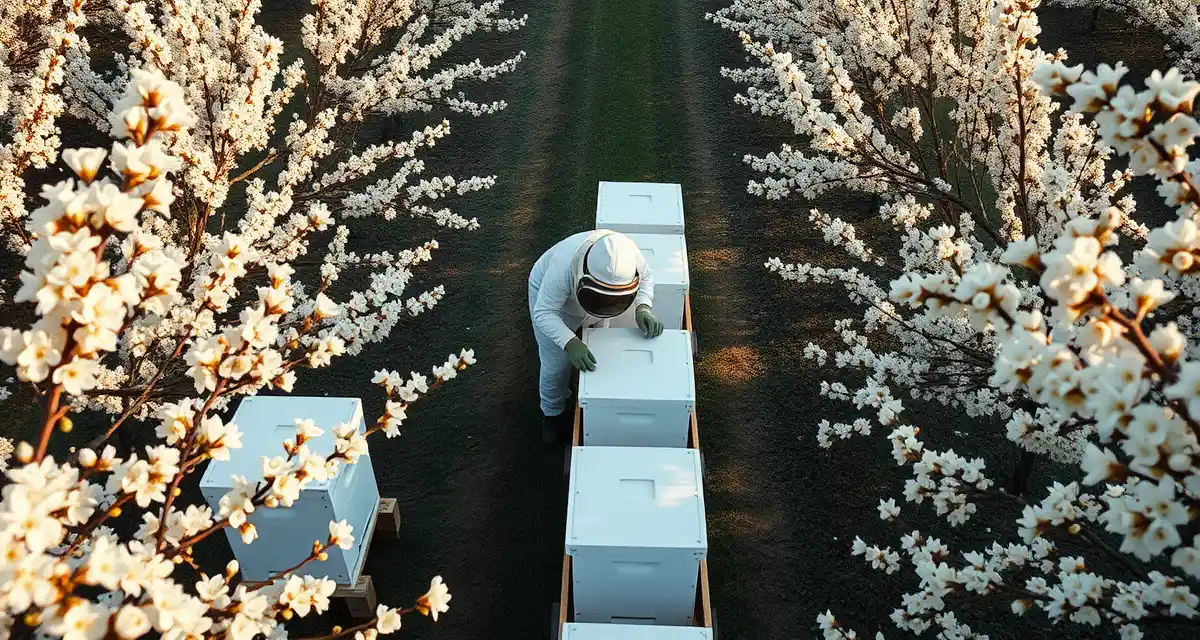
When to Put Bees in Almond Orchards
Industry guidance calls for hive placement at 10-25% bloom, but most beekeepers miss the ideal window by a few days in at least one or two yards every season. Not because they're careless, but because bloom timing is genuinely hard to predict manually across a large operation.
The standard recommendation is to have hives in place before 10% bloom, which allows colonies 1-2 days to orient and begin foraging before the peak window opens. Getting there at 25% bloom still works. Getting there at 50% bloom means you've missed a significant portion of the highest-receptivity window.
TL;DR
- California almond pollination consumes roughly 80% of the US commercial hive population every February, making it the most supply-constrained pollination market in the country.
- Per-hive rates have held between $185 and $220 for 6-8 frame colonies over recent seasons.
- Contracts are typically signed October through November for the following February season; operators without agreements by December are working from a weak position.
- Hive strength minimums range from 6 to 8 frames of bees depending on the grower, with premium-strength colonies commanding $200-215/hive.
- varroa management, documentation, and logistics coordination in the 6-8 weeks before delivery determine whether almond season is profitable or a breakeven event.
What Is 10% Bloom and Why Does It Matter?
"10% bloom" refers to the stage when approximately 10% of flowers on the tree are open. For almond, this is the entry point for the most effective pollination period.
Here's why it's the trigger for hive placement:
Almond flowers are most receptive to pollen immediately after they open. The stigma (the female part of the flower) is chemically reactive to pollen for a window of 2-4 days after flower opening. After that window, pollination potential drops rapidly even if the flower is still visually open.
If your bees arrive at 10% bloom, they're in place when the first wave of receptive flowers opens. They orient to the orchard environment during that first day or two, then ramp up foraging activity as the main bloom wave hits. By full bloom (50-70% open flowers), your colonies are fully active and working the most concentrated mass of receptive flowers.
If your bees arrive at 30-40% bloom, you've missed the early-opening flowers entirely. Those flowers may still set fruit from the pollen already present, but the density of active foragers during the most critical early period was lower than it should have been.
How Early Is Too Early to Put Bees in an Almond Orchard?
Placing hives more than 10 days before bloom start isn't harmful, but it's inefficient. Your hives are sitting on a site without forage, burning through winter stores without the bloom pollen income that would sustain and grow the colony. You've also committed your trucks and yard capacity earlier than necessary.
The practical answer: aim for 5-7 days before expected 10% bloom. This gives colonies time to:
- Acclimate to the new environment
- Establish orientation flights
- Begin foraging on any available early-opening flowers
- Reach peak foraging activity by the time main bloom hits
Placing at 7-10 days before bloom is fine if your logistics require it, and many beekeepers prefer arriving early for a large delivery to ensure setup is complete without last-minute pressure. Just be aware that early-arriving colonies may consume more resources before the main bloom arrives.
What Happens if My Hives Arrive Too Late for Almond Bloom?
Arriving at 50% bloom or later means you've missed the peak of the receptive window. The practical consequences:
Reduced pollination effectiveness: Flowers that opened early and weren't serviced during their peak receptivity window may still set fruit from pollen already present, but the fruit set rate will be lower than in well-timed placements. Growers track set rates, and late-arriving hives show up in the data.
Contract compliance risk: Some almond contracts specify a delivery date tied to bloom percentage. "Deliver by 10% bloom" is a specific requirement that generates a compliance question if you arrive late. Your GPS delivery timestamp is your documentation of whether you met the requirement.
Grower relationship impact: Growers remember which beekeepers show up on time and which ones are scrambling. Over multiple seasons, late delivery patterns affect renewal conversations and rate negotiations.
The most expensive version of arriving late is when warm weather has accelerated bloom 7-10 days earlier than the historical date you planned around. Late-arriving hives in this scenario miss not just the early flowers but potentially a compressed bloom that's already 40% complete by the time your truck arrives.
How PollenOps Bloom Timing Alerts Solve the Timing Problem
PollenOps almond bloom alerts monitor accumulated growing degree days and chilling hours for your specific yard locations in California's almond-producing regions. The system tracks bloom timing conditions in real time rather than relying on historical dates.
Alerts fire 5-7 days before projected 10% bloom at each monitored location. When an alert comes in, you have the specific lead time you need to confirm truck schedules, driver assignments, and final logistics before moving.
The alerts also adjust when weather conditions change rapidly. In a warm year when bloom is accelerating faster than the historical average, the growing degree day accumulation reflects that acceleration. Your alert fires earlier than it would have based on last year's calendar, giving you the warning time you need to move up your truck schedule.
For an operation with 20 almond contracts across multiple districts, you'll receive district-specific alerts as bloom conditions develop in each area. You're not managing a single generic "almond bloom is starting" alert. You're seeing when bloom is approaching at each specific location, tied to the contracts that serve each district.
Almond Variety Timing Variation
Different almond varieties bloom at slightly different times, and California orchards often contain multiple varieties interplanted to ensure cross-pollination.
The main commercial varieties by approximate bloom order (earliest to latest in typical years):
- Ne Plus Ultra: among the earliest-blooming commercial varieties
- Butte: early-mid season
- Monterey: mid-season
- Nonpareil: the dominant commercial variety, typically mid-season
- Carmel: slightly later than Nonpareil
- Fritz: late-season
- Padre: among the later bloomers
In practice, most commercial orchards are planted with a mix that includes Nonpareil plus one or more pollenizer varieties. The Nonpareil bloom is typically the key timing event for delivery, since it's the primary commercial variety. But understanding the variety mix at each orchard you service lets you calibrate your delivery timing more precisely.
Frequently Asked Questions
What is 10% bloom and why does it matter for almond pollination?
10% bloom is the stage when approximately 10% of almond flowers have opened. It marks the beginning of the effective pollination period because almond flowers are most receptive to pollen immediately after opening, with a 2-4 day window of peak receptivity per flower. Hive placement before 10% bloom ensures that colonies are oriented and foraging actively when the main bloom wave hits and the highest-receptivity flower density occurs. Most commercial contracts specify delivery by 10% bloom for this reason.
How early is too early to put bees in an almond orchard?
More than 10 days before expected bloom start is generally considered too early, as colonies spend resources without forage income and truck capacity is committed before necessary. The ideal window is 5-7 days before projected 10% bloom, which gives colonies time to acclimate and begin orientation flights without sitting too long before the bloom opens. Early placement is preferable to late placement when logistics require a choice.
What happens if my hives arrive too late for almond bloom?
Late-arriving hives miss the early-opening flowers and their peak receptivity window, reducing overall fruit set rates for the orchard. If your contract specifies delivery by a bloom percentage threshold, arriving after that point creates a compliance question documented by your GPS delivery timestamp. Over multiple seasons, late delivery patterns affect grower relationships and renewal negotiations. PollenOps bloom alerts fire 5-7 days before 10% bloom to give you specific lead time for logistics decisions.
How early should almond pollination contracts be negotiated?
Large almond growers and broker networks begin securing hive commitments in July and August for the following February season. Written contracts are typically signed October through November. Operators who do not have signed agreements by December are working from a weak position since most quality hive inventory is already committed. Start grower outreach in mid-summer and target signed agreements before Thanksgiving.
What documentation is required for hive delivery to California almonds?
California requires a Certificate of Health for out-of-state colonies, issued by the origin state's apiary inspection program within 30 days of entry. The certificate must certify freedom from American foulbrood, European foulbrood, and Varroa destructor below treatment threshold. Some states require small hive beetle freedom for California entry. In addition, many growers now expect documentation of pre-delivery mite counts confirming colonies are below threshold.
What happens to hives after almond season ends in late March?
Post-almond options include moving north for Pacific Northwest cherry or apple pollination in April-May, routing to Michigan or Maine blueberries in May-July, transitioning to summer honey yards in North Dakota or Montana, or staying in California for splits and rebuilding. The right choice depends on hive strength coming out of almonds and downstream contract commitments. Operators who plan their full-year circuit in advance can optimize both pollination revenue and honey production.
Try These Free Tools
Sources
- USDA Agricultural Research Service
- Bee Informed Partnership
- American Beekeeping Federation (ABF)
- Almond Board of California
- University of California Cooperative Extension
Get Started with PollenOps
Almond season is the revenue event that defines the commercial beekeeping year, and the details -- contract terms, delivery timing, hive strength documentation, and invoicing -- determine whether the season is profitable. PollenOps manages the full almond contract lifecycle from quote to final payment, with yard tracking, crew scheduling, and grower communication built in. See how it works for operations from 200 to 5,000 hives.