How to Manage Almond Season Logistics
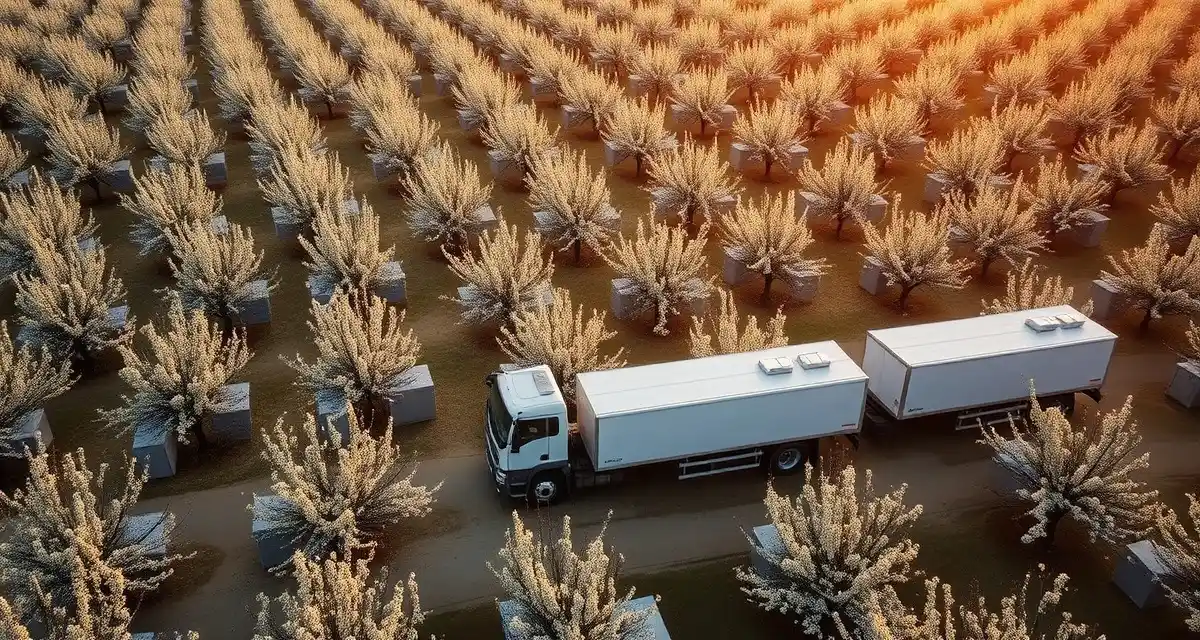
California almond season involves the movement of over 1.5 million hives in a 3-week window. For the individual operator, that broader context translates into compressed timelines, competing demands on truck time, and a logistical environment where small delays have downstream consequences across your entire delivery schedule.
The beekeepers who execute almond season smoothly are the ones who planned it in detail before February arrives, not the ones who are still making decisions under pressure when bloom alerts fire.
TL;DR
- California almond pollination consumes roughly 80% of the US commercial hive population every February, making it the most supply-constrained pollination market in the country.
- Per-hive rates have held between $185 and $220 for 6-8 frame colonies over recent seasons.
- Contracts are typically signed October through November for the following February season; operators without agreements by December are working from a weak position.
- Hive strength minimums range from 6 to 8 frames of bees depending on the grower, with premium-strength colonies commanding $200-215/hive.
- varroa management, documentation, and logistics coordination in the 6-8 weeks before delivery determine whether almond season is profitable or a breakeven event.
The Almond Season Timeline
Understanding the season-level structure helps you plan within it:
October-November: Contract negotiation and early signing. The best contracts go to beekeepers who are proactive. Signing before January typically earns 5-15% higher rates.
December: Colony preparation, varroa management assessment, truck and equipment service, health certificate procurement, county registration completion.
January: Final contract confirmations, pre-move strength assessment for early-delivery yards, route plan finalization, driver scheduling.
Early February: Southern Valley deliveries as bloom alerts fire for Kern and Kings Counties. First deliveries of the season set the operational tempo.
Mid-February: Main Central Valley deliveries. This is the peak logistics window when most contract deadlines concentrate.
Late February-early March: Northern Valley and Sacramento Valley deliveries as bloom progresses north.
March: Hive retrieval from early-blooming orchards, final northern deliveries, first invoice cycle.
How Do I Prepare My Operation for California Almond Season?
Start in November, not January. The beekeepers who are scrambling in early February missed their preparation window.
Colony preparation: Your almond colonies should be under varroa management from August through October so they emerge from winter at contract-ready strength. If you're discovering in January that your colonies are below strength minimum, your preparation was too late.
County registration: California requires county-level registration in every county where you place hives. Complete this before your first delivery. Kern, Kings, Fresno, Madera, Merced, Stanislaus, San Joaquin, Glenn, Tehama, and Colusa counties all have their own registration requirements. Some have specific windows for seasonal operator registration that close before January.
Health certificates: For operations moving bees from out of state, health certificates are issued by your home state inspector and are typically valid for 30 days. Time your inspection so the certificate is still valid on your first delivery date, not your contract signing date.
Route planning: Build your district-level delivery sequence before season starts. Which yards deliver to the southern Valley first? Which trucks run which routes? Where are your truck staging areas? Pre-built routes execute faster than routes planned the night before a move.
Bloom timing alert calibration: Set your PollenOps bloom alerts for each district before the season. Test that the alert thresholds are set correctly. You don't want to discover your alerts weren't configured when you're 10 days from the first delivery.
How Do I Coordinate Hive Deliveries for 30 Simultaneous Almond Contracts?
Thirty simultaneous contracts means thirty delivery deadlines that may be concentrated in the same 2-3 week window. Coordinating these requires:
Contract calendar view: All 30 contracts visible in a single calendar with their delivery deadlines, service periods, and payment schedules. PollenOps almond logistics dashboard provides this view with bloom timing overlays showing which contracts are in active bloom zones.
District-based sequencing: Group your contracts by district (southern Valley, central Valley, northern Valley). Deliver districts in bloom-timing order: southern deliveries first as alerts fire, then central, then northern. This sequence prevents you from chasing bloom across the Valley.
Pre-built driver assignments: Each driver knows their route and delivery sequence before they start. You're not calling drivers every morning with instructions for that day. The schedule is built, and drivers execute it.
Pre-move assessment completion: Assessments for each yard should complete at least 48-72 hours before the planned delivery, not the morning of. If a yard has compliance issues, you need time to address them before the truck is loaded.
Grower notification workflow: As each delivery completes, the grower notification goes out within 1-2 hours. PollenOps generates the arrival report from the GPS field check-in automatically.
What Happens if My Bees Arrive at an Almond Orchard After Bloom Has Peaked?
This is the scenario that leads to the most difficult contract conversations.
Contract compliance: If your contract specifies delivery by 10% bloom and you arrive at 40% bloom, you're in breach of the delivery terms. The documentation of your actual delivery timestamp versus the contracted deadline is the factual basis for whatever conversation follows.
Performance impact: Late-arriving bees miss the early-opening flowers and their peak receptivity window. The grower's fruit set from those flowers is reduced compared to what properly timed placement would have achieved. Growers track this data.
Grower communication: Contact your grower before arrival, not after. If you know your delivery is going to be late (weather, truck breakdown, traffic), call ahead. Growers who receive a heads-up call handle the situation better than growers who discover late-arriving bees without prior notice.
Documentation for dispute context: Your bloom alert timestamps (when PollenOps notified you bloom was approaching) and your delivery timestamp (when you actually arrived) tell the story. If your alert fired on February 6 and you delivered on February 12, the timeline shows when you knew and when you acted. If your delivery timestamp is before bloom peak but the grower claims otherwise, your GPS record is the evidence.
Renewal impact: Growers remember. A late delivery that the grower perceives as avoidable affects your renewal conversation in the fall.
Route Planning During Active Season
Once the season is running, route planning isn't a pre-season activity anymore. It's a daily operational decision informed by:
- Which bloom alerts have fired and which are imminent
- Which contracts have the most urgent delivery deadlines
- Where your trucks are at the end of each day (minimizing deadhead back to staging)
- Which yards need assessment before the next day's deliveries
PollenOps route optimization updates route suggestions as bloom alerts fire, keeping your delivery sequence optimized as real-world conditions change. A bloom alert that fires 3 days ahead of schedule changes the priority of contracts in that district. The route optimizer incorporates that change automatically.
Frequently Asked Questions
How do I prepare my operation for California almond season?
Start in October: begin contract negotiation and signing, initiate colony varroa management programs, schedule truck service, and research county registration requirements. Complete county apiary registrations before your first delivery. Time health certificate procurement so certificates are valid on your first delivery date. Build your district delivery sequence and driver assignments in PollenOps before January. Set bloom timing alert thresholds by district. By the time your first alerts fire in early February, your operation should be executing a pre-built plan, not building one.
How do I coordinate hive deliveries for 30 simultaneous almond contracts?
Group contracts by district and sequence deliveries in bloom-timing order (southern Valley first, central second, northern third). Build a contract calendar where all 30 contracts are visible with their deadlines and service periods. Pre-assign each truck's route and driver's delivery sequence before the season starts. Complete strength assessments 48-72 hours before planned deliveries. Use PollenOps's almond logistics dashboard to track active placements, upcoming bloom alerts, and outstanding invoices in a single view.
What happens if my bees arrive at an almond orchard after bloom has peaked?
Contact your grower before arrival, not after. If the delivery is late relative to your contract's specified timing, acknowledge it directly. Your GPS delivery timestamp and the bloom alert history show the factual timeline. Late-arriving bees miss the early-opening flowers and their peak receptivity window, reducing fruit set for the affected flowers. Document what happened and why, and address the grower relationship proactively. Renewal conversations that follow a late delivery are much harder than those that follow clean on-time performance.
How early should almond pollination contracts be negotiated?
Large almond growers and broker networks begin securing hive commitments in July and August for the following February season. Written contracts are typically signed October through November. Operators who do not have signed agreements by December are working from a weak position since most quality hive inventory is already committed. Start grower outreach in mid-summer and target signed agreements before Thanksgiving.
What documentation is required for hive delivery to California almonds?
California requires a Certificate of Health for out-of-state colonies, issued by the origin state's apiary inspection program within 30 days of entry. The certificate must certify freedom from American foulbrood, European foulbrood, and Varroa destructor below treatment threshold. Some states require small hive beetle freedom for California entry. In addition, many growers now expect documentation of pre-delivery mite counts confirming colonies are below threshold.
What happens to hives after almond season ends in late March?
Post-almond options include moving north for Pacific Northwest cherry or apple pollination in April-May, routing to Michigan or Maine blueberries in May-July, transitioning to summer honey yards in North Dakota or Montana, or staying in California for splits and rebuilding. The right choice depends on hive strength coming out of almonds and downstream contract commitments. Operators who plan their full-year circuit in advance can optimize both pollination revenue and honey production.
Try These Free Tools
Sources
- USDA Agricultural Research Service
- Bee Informed Partnership
- American Beekeeping Federation (ABF)
- Almond Board of California
- University of California Cooperative Extension
Get Started with PollenOps
Almond season is the revenue event that defines the commercial beekeeping year, and the details -- contract terms, delivery timing, hive strength documentation, and invoicing -- determine whether the season is profitable. PollenOps manages the full almond contract lifecycle from quote to final payment, with yard tracking, crew scheduling, and grower communication built in. See how it works for operations from 200 to 5,000 hives.