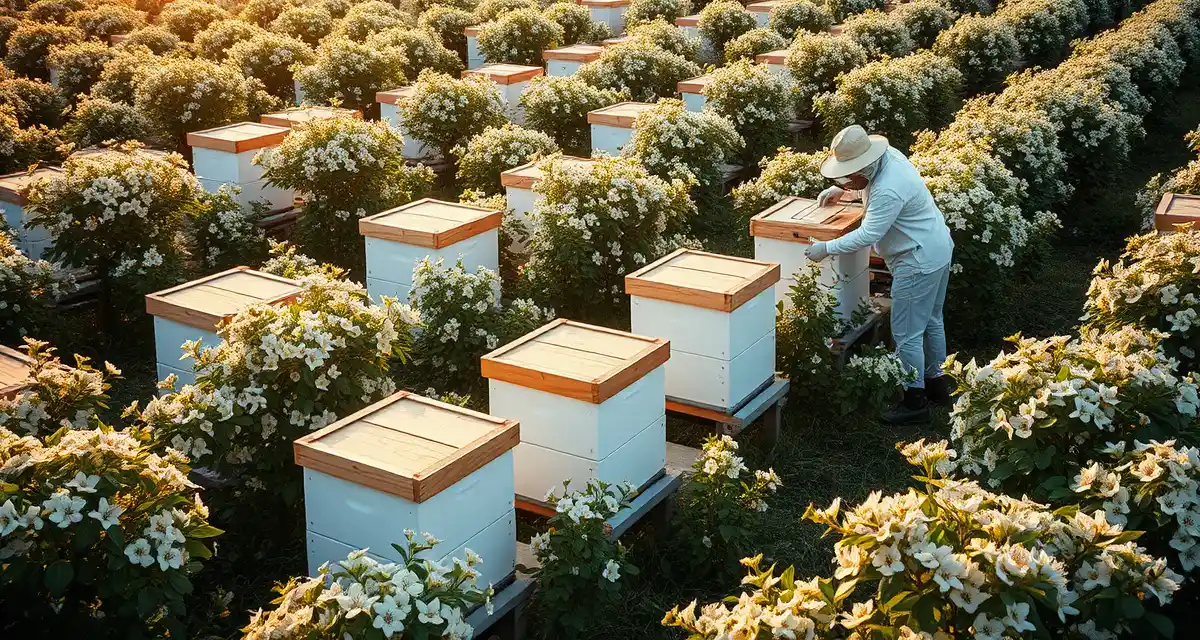
Pollination Service Management Software in New Jersey
New Jersey ranks in the top 5 states for both blueberry and cranberry production in the US. The state's southern half, particularly Burlington, Ocean, Atlantic, and Cape May counties, hosts one of the highest concentrations of berry growers needing commercial pollination services on the East Coast.
For a beekeeper working the mid-Atlantic and Northeast markets, New Jersey is a key stop that can anchor multiple weeks of contract income during the May-July berry season.
TL;DR
- Commercial beekeeping operations face two primary management challenges: operational logistics (hive health, transport, placement) and administrative coordination (contracts, payments, documentation).
- Most disputes and revenue losses in commercial beekeeping are preventable with better documentation and clearer contract terms.
- The operations that run most profitably are those with disciplined systems for tracking hive health, contract status, and fleet logistics in one place.
- PollenOps is built specifically for the operational complexity of commercial-scale pollination services, not adapted from a hobbyist tool.
- The most important management decisions (treatment timing, contract renewal, hive allocation) require accurate current data to make well.
New Jersey's Pollination Crops
Highbush blueberries: The Pine Barrens and surrounding areas of southern New Jersey support significant commercial highbush blueberry production. The sandy, acidic soils of the coastal plain are ideal for blueberry culture. NJ blueberry bloom typically runs late April through mid-May, putting it earlier than Michigan but later than Florida.
Cranberries: Burlington and Ocean counties produce significant commercial cranberry volumes in the traditional bog system. New Jersey cranberry bloom runs mid-June to early July, providing a natural continuation after blueberry season.
Peaches: South Jersey peach orchards bloom in April, providing an early-season opportunity. Peach is partially self-fertile but benefits from cross-pollination.
Apples: Central New Jersey apple orchards bloom in late April to early May. New Jersey's apple industry is smaller than the big apple states but represents a local market for pollination services.
Peppers and tomatoes: South Jersey's vegetable production includes peppers and tomatoes, which benefit from bee pollination for seed production contracts.
New Jersey Blueberry Bloom Calendar
New Jersey highbush blueberry bloom timing:
- Early varieties (Duke, Earliblue): Late April to early May in most years
- Main season varieties (Bluecrop, Blueray): Early to mid-May
- Late varieties (Jersey, Coville): Mid-to-late May
Southern New Jersey's coastal plain climate is warmer than inland areas and tends to bloom slightly earlier than the same varieties in more northern or inland locations.
Comparison to Michigan: New Jersey highbush bloom typically runs 1-2 weeks before Michigan's Van Buren County bloom. This creates an opportunity for beekeepers to work NJ blueberry contracts first, then move northwest to Michigan for the main Michigan season.
PollenOps blueberry bloom tracking provides state-specific bloom timing for NJ's production areas, separate from the Michigan models, because the climatic drivers are different enough to warrant separate calibration.
Cranberry Bog Access in New Jersey
New Jersey cranberry operations face the same bog access logistics as Massachusetts and Wisconsin: hives need to be placed on levees or at designated bog perimeter spots when water and bog conditions allow.
NJ cranberry bog alerts in PollenOps include site-access scheduling for equipment-intensive placements. When bog levee conditions are appropriate for truck access, you're notified alongside the bloom timing alert, so you're not showing up to a bog with a full truckload and discovering the levee is still too wet.
Cranberry pollination management in PollenOps tracks NJ-specific bloom timing and bog access considerations, separate from Wisconsin and Massachusetts models because NJ's ocean-influenced climate creates distinct timing.
When Does Blueberry Bloom in New Jersey Compared to Michigan?
New Jersey highbush bloom typically starts 1-2 weeks before Michigan's core blueberry belt in Van Buren County. In a typical year:
- South NJ (Burlington/Atlantic County): Early to mid-May for main varieties
- Van Buren County, Michigan: Mid-to-late May for main varieties
This 1-2 week gap is useful for cascade scheduling. Beekeepers who deliver to New Jersey blueberry contracts in early May can potentially transition the same hives to Michigan contracts in mid-May, depending on service period length and drive time.
How Do I Manage Both Blueberry and Cranberry Contracts in New Jersey?
The bloom sequence works in your favor: blueberry bloom ends in late May to early June, and cranberry bloom starts in mid-June. There's typically a 1-3 week gap between the two crops' peak pollination periods.
This gap has practical implications:
- Hives that finish blueberry service in late May need somewhere to go before cranberry placements in mid-June
- Some beekeepers use this window for local honey production or move hives to a holding yard
- Others schedule a quick move to nearby apple orchards if late-blooming varieties are still receptive
Managing both blueberry and cranberry contracts with the same hive fleet requires a contract calendar that shows both crop windows, the transition gap between them, and your logistics plan for that gap.
PollenOps keeps both contract types in the same calendar view with separate bloom timing alerts for each crop, so you can see the full May-July NJ berry season as a single, planned sequence.
What Are NJ Bee Health Requirements for Commercial Pollination Operations?
New Jersey requires state apiary registration for all commercial beekeeping operations. Out-of-state beekeepers placing hives in NJ for seasonal pollination must:
- Obtain a NJ apiary registration number from the New Jersey Department of Agriculture
- Carry a valid health certificate from their home state (issued within 30 days of entry)
- Register the specific yard locations with the state upon arrival
New Jersey has historically been proactive about monitoring for American foulbrood and varroa, and inspectors do conduct seasonal yard visits in the berry-growing counties during pollination season.
Frequently Asked Questions
When does blueberry bloom in New Jersey compared to Michigan?
New Jersey's highbush blueberry bloom typically runs 1-2 weeks ahead of Michigan's Van Buren County. Main season varieties in southern New Jersey bloom in early to mid-May, while Michigan's main season runs mid-to-late May. This timing differential creates cascade scheduling opportunities for beekeepers who can service NJ contracts first, then transition to Michigan.
How do I manage both blueberry and cranberry pollination contracts in New Jersey?
The two crops have a natural sequence: blueberry bloom ends in late May to early June, and cranberry bloom starts mid-June. PollenOps manages both contract types with separate bloom timing alerts and shows the complete NJ berry season in a single calendar view. Plan your hive positioning during the 1-3 week gap between crops, whether that means a holding yard or a brief move to another pollination opportunity.
What are NJ bee health requirements for commercial pollination operations?
New Jersey requires state apiary registration for all commercial operations, including seasonal out-of-state operators. Out-of-state beekeepers need a current home-state health certificate (issued within 30 days), a NJ apiary registration number, and location registration with the state for each yard. New Jersey inspectors actively monitor berry-growing counties during pollination season.
What is the difference between commercial and hobby beekeeping?
Commercial beekeeping is distinguished by scale (typically 100+ hives, often 500-5,000+), revenue source (pollination contracts and bulk honey sales rather than local honey retail), and management approach (systematic protocols applied across yards rather than individual colony attention). Commercial operators manage bees as an agricultural enterprise, with the administrative, regulatory, and logistical complexity that entails. Most commercial operators derive the majority of their income from pollination services; honey production is a supplementary revenue stream.
How many hives are needed to make commercial beekeeping a full-time income?
Most beekeeping economists put the full-time commercial threshold at 500-800 hives, assuming efficient operations management and a combination of pollination and honey revenue. At 500 hives and $200/hive for almond pollination, almond season alone generates $100,000 in gross revenue before expenses. Net margins depend on operational efficiency, but well-run operations can achieve 30-50% net margins on pollination revenue. Additional crops and honey production improve per-hive economics but require additional management capacity.
What is the annual revenue potential for a 1,000-hive commercial operation?
A 1,000-hive operation running an almond season ($200/hive) plus blueberry or apple contracts ($80-100/hive) plus summer honey production ($25-40/hive after extraction costs) can generate $300,000-360,000 in annual gross revenue. Net margins after transport, crew, equipment, and hive replacement costs typically run 25-40% for well-managed operations, putting net income at $75,000-145,000 annually. The specific number depends heavily on circuit efficiency, loss rates, and contract quality.
Try These Free Tools
Sources
- USDA Agricultural Research Service
- Bee Informed Partnership
- American Beekeeping Federation (ABF)
- American Honey Producers Association
- Project Apis m.
Get Started with PollenOps
Managing a commercial beekeeping operation involves more data, more deadlines, and more moving parts than any general-purpose tool was designed to handle. PollenOps brings contracts, yard records, health documentation, and fleet logistics together in one platform built for the realities of commercial-scale beekeeping.